

Divorce can be a tough time for anyone, but when you are in Dubai, it adds a few more layers of things to think about. That’s why divorce financial planning is so important here. For many, Dubai is a place of investment, property, and international living. When a marriage ends, sorting out money and assets becomes even more complex.

One big worry for people divorcing in Dubai is what happens to their property. Maybe you own a home, or several rental properties, or you’re an investor. Deciding how these assets will be split can be tricky. You also have to think about your residency status, especially if it’s tied to your spouse or property. Without careful divorce financial planning, you could face big financial risks and unexpected changes to your life here. Many people find it helpful to get ready by making a checklist of all their financial documents, like bank statements and property deeds, early on.

This can really help when discussions begin.
This guide is here to help you through it all in 2026. We’ll give you clear, practical steps to protect your money and future. You’ll learn about important legal considerations unique to Dubai and get a plan to help you recover financially. This is especially for investors, expats, and landlords who need to secure their wealth and lifestyle during and after a divorce. Understanding what is a financial planning approach for your situation can make all the difference.
If you are a property investor in Dubai, managing your wealth effectively is always a priority. It’s no different when going through a divorce. Getting expert help can ensure your assets are handled wisely. We can also help you with Dubai wealth management and financial planning for property investors even during challenging times.
Buying, selling, renting, or investing in Dubai? Connect with Ayaz Salman for a FREE Dubai Real Estate Consultation.
When thinking about your money and property during a divorce in Dubai, it’s super important to know how the law works here. The legal rules in Dubai can greatly change what happens to your assets. This is especially true for investors, expats, and landlords. You need a clear [divorce financial planning] strategy to make sure your wealth is safe.
There are generally two main sets of laws that might apply. For Muslim couples, Federal Decree-Law No. 41 of 2024 on the Personal Status Law usually guides how divorces happen and how assets are split. For non-Muslim expats, things can be a bit different. They often have a choice: they can use the new UAE Civil Personal Status Law, or they can ask the court to apply the laws from their home country instead. This choice can really affect your financial outcome, so it’s a big part of your [divorce financial planning].
In general, the UAE uses a "separate property regime" for asset division. This means that if something like a house or an investment is registered only in your name, it’s usually considered yours alone. The same goes for your spouse. There’s no automatic split of everything you both own together, like in some other countries. This is a very important point for anyone with property in Dubai, as explained in the guide to Property Division During Divorce in the UAE 2026. This rule means that what is in your name stays with you, and what is in your spouse’s name stays with them.
However, things can get tricky. You might have questions about:
- Property Titles: What if a property was paid for by both, but only one name is on the title deed? This can create arguments.
- Joint Bank Accounts: If you have bank accounts together, how will the money in them be split? You might need to show who put money in or what it was used for.
- Debts: Who is responsible for loans or credit card debts taken out during the marriage? This also often depends on whose name the debt is in.
Because of these common questions, having clear paperwork for all your assets and debts is key. This helps avoid confusion and ensures you’re prepared. Expert personal financial advisors can help you understand these rules and prepare your finances for any situation. They can guide you through these complex parts of Dubai’s legal system, making sure you protect your investments and future.
Inventorying Assets: Property, Bank Accounts, Businesses and Investments
Since clear paperwork is super important, the next step in smart [divorce financial planning] is to make a full list of everything you own and owe. This detailed list, often called an asset inventory, helps you get ready for any talks about money. Before any negotiations begin, you should put together a checklist of all your financial assets and debts. This means noting down every bit of property, every bank account, all your investments, and any businesses you own.
Gathering all these details helps you understand "what is a financial planning" roadmap you need to follow. It also helps you show proof of what belongs to whom. According to a Comprehensive Legal Guide to Property Settlement on Divorce in UAE, having all your documents ready is a must.
Here are some tricky things to think about when listing your assets in Dubai:
- Jointly-Held Real Estate: Even though Dubai often uses a "separate property regime" where what’s in your name stays yours, things are different if a property is in both your names. If both spouses are on the title deed for a property, the law generally sees it as owned together. This means the court might help you figure out how to split that joint ownership fairly. You might also need to understand the steps and fees involved if you need to Add or Remove Name from Title Deed Dubai (2026) for a property. Knowing how property ownership is recorded with the Dubai Land Department is a key part of Property Division in Divorce: What Dubai Law Says.
- Mortgaged Properties: If you have a house with a mortgage, it is important to know whose name is on the loan. Usually, the person whose name is on the mortgage is responsible for paying it back. But if both names are on the mortgage, you both share that responsibility.
- Business Ownership: What about businesses you or your spouse own? If one spouse fully owns a business, it’s generally considered their separate property, just like a house in their name. However, if the other spouse contributed money or effort to the business during the marriage, they might have a claim for that contribution, even if their name isn’t on the business papers. Under Family Law 2026 – UAE | Global Practice Guides, ownership is determined by title, but capital claims can arise from joint ownership or written agreements.
To truly understand "what are financial planning" best practices in this area, you should seek guidance. A good financial advisor can help you sort through these complex details. If you’re looking for guidance on your Dubai real estate, consider a FREE Dubai Real Estate Consultation to talk about your specific needs. Understanding these parts of your finances is a big step in keeping your wealth safe during a divorce. For more help, you can also learn about what does a financial advisor do for Dubai property investors.
Managing Dubai Real Estate During Divorce: Sell, Hold, Rent, or Transfer?
Once you have a clear picture of your Dubai real estate assets, the next big step in your [divorce financial planning] is deciding what to do with them. Should you sell the property, keep it and rent it out, or transfer it to your spouse? Each choice has its own set of things to think about. This part of your financial planning needs careful thought to protect your money.
Selling Your Dubai Property
Selling your property can be a good option if you want a clean break and cash in hand. The money can then be split as part of your divorce settlement. However, selling a property in Dubai involves steps and fees. You’ll need to work with the Dubai Land Department (DLD) for the transfer process. This process includes getting a "No Objection Certificate" (NOC) from the developer and paying DLD transfer fees, which are usually 4% of the property value. For a guide on the steps, you can refer to the Property Transfer Procedure In Dubai :Step‑by‑Step Guide.
Holding Your Property as a Rental
Another idea is to keep the property and rent it out. This can give you a steady income stream, which might be helpful for your long-term financial health. If you choose this path, you’ll need to think about how to manage the rental income and the existing tenancy contracts. You might also need to work with property managers or real estate agents to handle finding new tenants, collecting rent, and maintaining the property. To make sure this works well, it helps to create a post-divorce financial plan that includes managing rental assets. You can find more tips on how to buy rental properties in Dubai effectively.
Transferring Property Ownership
Sometimes, one spouse might take over full ownership of a property as part of the divorce agreement. This means the name on the title deed would change. In Dubai, ownership is usually determined by whose name is on the title deed. If real estate needs to change hands due to a divorce, the transfer is handled through a Real Estate Registration Trustee center and has specific government fees, as explained in the guide to Property Division During Divorce in the UAE 2026. Getting this done means a visit to a Customer Happiness Center at the Land Department with all the right documents to start a Title transfer application.
Figuring out whether to sell, rent, or transfer your Dubai property is a big decision that impacts your financial future.

To better understand "what are financial planning" best practices for these choices, it’s wise to consider your personal financial goals. For a deeper look at whether selling or holding makes more sense for your property in 2026, you might find this guide useful: Should You Sell or Hold Your Dubai Property in 2026? Full Investor Guide. A personal financial advisor can help you weigh these options and make the best choice for your situation, ensuring your overall Dubai wealth management and financial planning for property investors stays strong.
For expats and international investors, sorting out Dubai property during a divorce means looking at more than just local rules. You also need to think about taxes, where you officially live, and how your money is held across different countries. This part of your [divorce financial planning] is very important and can be quite complex.
Your Home Country and Dubai Residency
One big thing to know is that moving to Dubai does not automatically mean you stop being a tax resident in your home country. Each country has its own rules for deciding if you still owe them taxes, like how many days you spend there. It takes careful planning to avoid having to pay taxes in two places at once. To help with this, if you meet the rules for living in the UAE, you should get your Tax Residency Certificate from the Federal Tax Authority in 2026. This certificate shows that the UAE is your main home for tax reasons. The UAE rules for being a tax resident often depend on how many days you spend in the country or if you have a permanent home here, as explained in guidance on the determination of tax residency.
Managing Money Across Borders
If you have properties, bank accounts, or other money in more than one country, your [divorce financial planning] gets even more involved. For example, American citizens living in Dubai must still follow US tax laws, including estate tax rules, even though the UAE does not have estate tax. This is because US citizens are taxed on their worldwide assets, as detailed in this US taxes for Americans in Dubai and the UAE: 2026 guide.
For British expats, new rules that started in April 2025 mean that if you have been a UK tax resident for 10 or more of the past 20 years, you might have to pay a 40% inheritance tax on all your money and property worldwide. This shows why it is so important to work with experts who understand the rules in all the countries where you have assets. You can learn more about these changes in the UK Inheritance Tax Reforms: What Expats in UAE Must Know in 2026.
Getting Expert Help for Your Cross-Border Plan
Because these tax and residency rules can be very tricky, it’s a good idea to get help from [personal financial advisors] who know a lot about international tax and wealth management. They can help you understand [what are financial planning] strategies that protect your assets in all your different locations. A [financial advisor for millionaires] or someone with a lot of wealth knows how to use special tools like registering Wills in the DIFC or setting up foundations and trusts. This helps make sure your money is managed well, especially during a divorce. For more insights on how to choose the right expert, read our guide on how to choose a fiduciary financial advisor Dubai for property. This expert help ensures your wealth is safe and passes on as you wish, even with complicated laws, as discussed in UAE Private Wealth & Estate Planning Laws 2026.
Are you navigating a divorce and need expert guidance on your Dubai real estate and wider financial situation?
FREE Dubai Real Estate Consultation
While getting expert help is key for managing complex international finances during a divorce, it’s just as important to focus on your everyday money needs right away. This means taking quick steps to make sure you have enough cash for important things and putting a new budget in place. This practical side of your [divorce financial planning] helps you stay steady during a tough time.
Sorting Out Your Immediate Cash Needs
One of the first things you need to do is make sure you have enough ready cash. This is called having "liquidity." Think about setting up an emergency fund, if you don’t have one already, to cover at least three to six months of living costs. This money will help you handle unexpected bills without stress.
Next, you need to deal with your most important bills. Make sure things like rent or mortgage payments, utility bills, and food costs are covered. If you own a business, you’ll need a clear plan for payroll and other operating costs. It’s also wise to check your mortgage payments on any property you own, especially if it’s in Dubai, to ensure they are paid on time.
A big step is to divide up bank accounts and close any joint accounts you share with your spouse. You should set up new bank accounts, savings accounts, and even credit cards just in your name. Also, remember to tell utility companies about any changes to who is responsible for payments. These steps help create a clear financial separation quickly, as advised in a checklist for a financially sound separation. Experts also suggest having a liquid account with enough money for a few months of expenses, according to a Post Divorce Checklist from Wells Fargo Advisors.
Creating Your New Budget
During and after a divorce, you’ll need a new budget. This budget will help you understand your new income and spending habits as an individual. To make a good budget, you need to gather all your financial papers. This means getting:
- Your last few months of pay stubs
- Your tax returns for the past two to three years
- Bank statements for all accounts (both shared and individual) from the last year
- Credit card statements showing current balances and how much you spend each month
- Any documents about loans you have
These documents give you a clear picture of your money situation, which is key for figuring out [what are financial planning] strategies that fit your new life. Preparing a realistic monthly budget is a common step during divorce mediation, as highlighted in divorce checklists.
Thinking about your personal money goals now is crucial. For more help with managing your money and property, especially in Dubai, you might find our personal financial planning tips for Dubai property investors useful. It’s all part of making smart financial choices for your future.
After you get your new budget set up, the next big step in your [divorce financial planning] is deciding how you and your spouse will agree on dividing everything. There are a few main ways this can happen: talking it out yourselves (negotiation), using a helper (mediation), or letting a court decide (litigation).
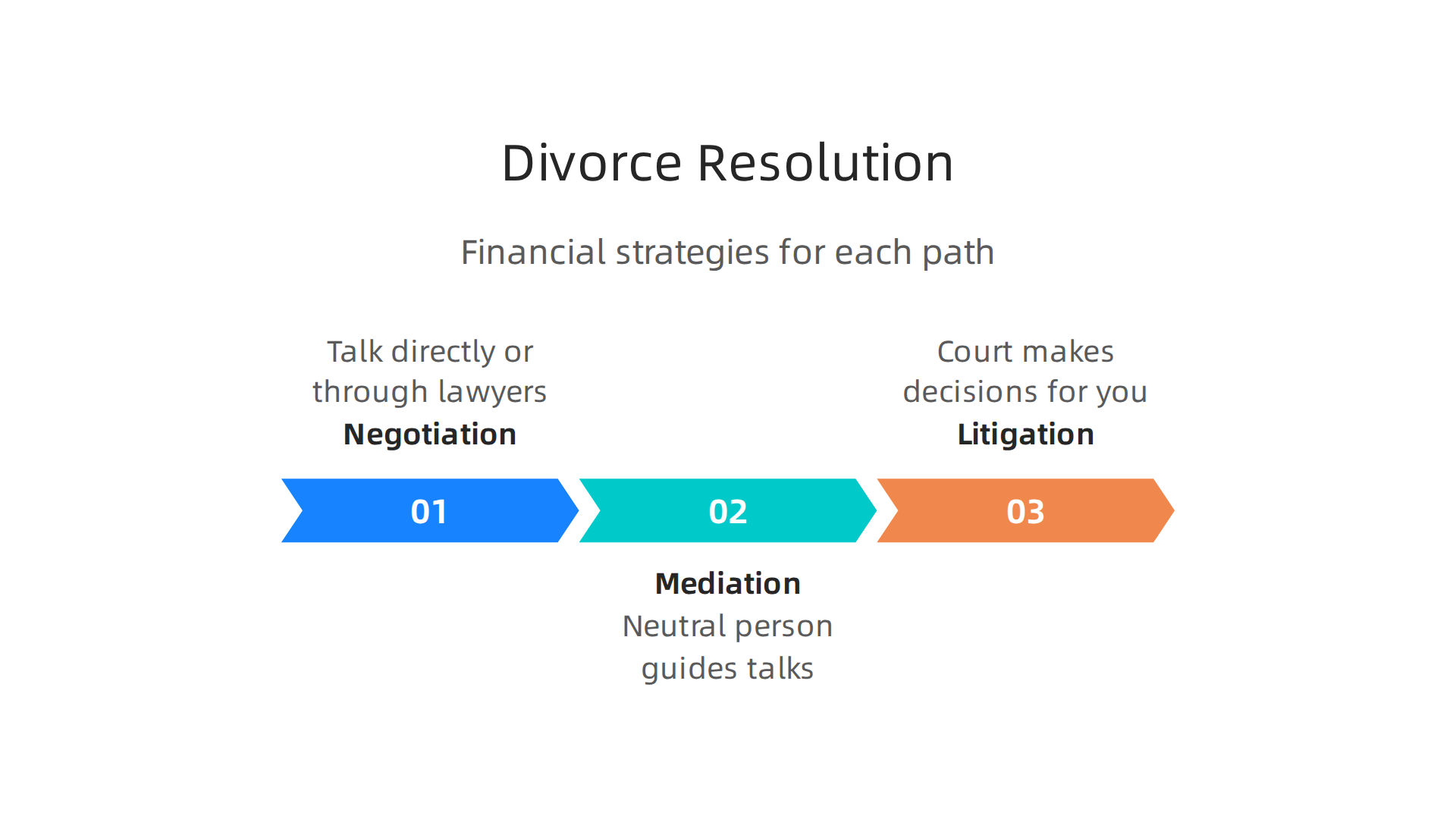
Each path has its own financial strategies and can lead to different results.
Choosing Your Path: Negotiation, Mediation, or Litigation
Negotiation is when you and your spouse talk directly or through your lawyers to reach agreements. This can save money because you avoid court fees. The goal is to work together to find solutions that make sense for both of you and your family.
Mediation is like negotiation, but you have a trained, neutral person called a mediator to help. They don’t take sides but guide your talks to find common ground. This can be a very good way to keep costs down and keep things friendly. For successful mediation, you will need to prepare all your financial papers. This means having pay stubs, tax returns, bank statements, and credit card statements ready, as explained in a guide on preparing for divorce mediation. Bringing these documents gives you a clear picture of your money, which is key for finding "what are financial planning" strategies that work for you. Another helpful resource for getting ready for these talks is the Divorce Mediation Checklist from Marble Law, which covers what to bring and how to get ready.
Litigation is when you can’t agree, and a court has to make decisions for you. This path is often more expensive and takes longer. When a court gets involved, it can change how your assets are divided. For example, in the UAE, the laws for property division are different from many other places. Each spouse generally keeps the assets registered in their own name, and there isn’t an automatic split of shared property, according to Property Division During Divorce in the UAE 2026. This means that if you own property in Dubai, the court will look at whose name it’s in. Understanding these specific rules is a big part of effective [divorce financial planning] if you live in places like the UAE. This is why having strong legal and financial guidance is so important. Knowing what does a financial advisor do for Dubai property investors can make a big difference in these situations.
Tools to Stabilize Your Finances During Divorce
No matter which path you take, some tools can help keep your money stable while things are being sorted out:
- Escrow Accounts: These are special accounts where a neutral third party holds money or assets until certain conditions are met. For instance, if you’re selling a shared property, the money from the sale might go into an escrow account until you and your spouse agree on how to divide it.
- Temporary Orders: A court can put temporary rules in place for things like who lives where, who pays certain bills, or how much support one spouse gives to the other while the divorce is ongoing. These orders help make sure that essential financial needs are met during the waiting period.
- Interim Financial Agreements: These are short-term agreements between you and your spouse about money matters before the final divorce is complete. They can cover things like who pays for the children’s school or how household expenses are managed. These agreements can prevent arguments and keep your financial life running smoothly.
Thinking about these different ways to handle your divorce is a key part of your overall [divorce financial planning]. You might also consider talking to personal financial advisors who can help you understand the financial impact of each path and plan for your future.
If you are dealing with property in Dubai and need expert help with your financial plans during this time, you can connect with an expert for further guidance.
FREE Dubai Real Estate Consultation
After settling the immediate financial steps, your divorce financial planning continues with rebuilding for the long term. This means looking at your investments, how you own property, and how you can grow your savings and credit. It’s a fresh start, and with smart choices, you can build a strong financial future.

Rebuilding: long-term financial and property strategies after divorce
Starting fresh after divorce means you need a new money plan. One key step is to create a personal financial roadmap just for you. This helps you understand your new income and expenses and set new goals, as highlighted in "5 Post-Divorce Investment Strategies" from IRRC. It’s about taking charge of your money and making it work for your future.
Resetting Your Investment Strategy
Your old investment plan was likely based on two incomes and shared goals. Now, you’ll need to update it for your single life. This might mean:
- Looking at your risk: With one income, you might want to take fewer risks with your money. Or, if you’re younger, you might feel ready to take on a bit more risk for bigger gains.
- Diversifying your portfolio: Don’t put all your eggs in one basket. Spread your money across different types of investments. For those interested in Dubai, a good investment strategy for 2026 suggests creating a balanced property portfolio with a mix of high-yield rental units and properties that will grow in value over time, according to the Dubai Property Portfolio 2026 Guide.
- Seeking expert advice: A personal financial advisor can help you create a plan that fits your new situation. They can guide you on what are financial planning steps you need to take.
Re-evaluating Property Holdings
If you owned property together, you might have sold it or one of you kept it. No matter what happened, you need to think about your next steps for housing. If you’re looking to invest in Dubai real estate, new rules in 2026 have made it easier to get an investor residency visa, with no minimum property value needed anymore, as noted in "Dubai: Land Department Removes Property Value Threshold". This could be a good chance to secure your future residency while investing. Also, it is important to know that transferring property ownership in Dubai after a divorce agreement usually involves going through a Real Estate Registration Trustee center and paying specific government fees, as outlined in Property Division During Divorce in the UAE 2026. This is important for your overall divorce financial planning.
Rebuilding Credit and Savings
Divorce can affect your credit score and savings. It’s important to build them back up.
- Credit Score: Make sure you pay all your bills on time. If you have any joint accounts with your ex-spouse, close them if possible, or make sure they are handled correctly so your credit isn’t damaged. Getting a new credit card in your name and using it wisely can also help.
- Savings: Start saving for your future. Even small amounts put away regularly can grow over time. Think about an emergency fund, retirement savings, and other goals.
Working with personal financial planning tips for Dubai property investors can make a big difference as you set new goals and plan your path forward. A financial advisor for millionaires or even just someone looking for smart guidance can help you navigate these changes.
Summary
This article explains practical divorce financial planning for people with property and investments in Dubai, with a focus on expats, investors, and landlords. It covers the legal landscape in the UAE — including separate property rules, choices for non‑Muslims about applicable law, and how title deeds and mortgages determine ownership — and shows how to prepare by inventorying assets, gathering documents, and assessing joint accounts and debts. You’ll learn the pros and cons of selling, renting, or transferring property, how residency and tax residency certificates affect cross‑border obligations, and which immediate steps protect cash flow and credit. The guide also walks through dispute pathways (negotiation, mediation, litigation), interim tools like escrow and temporary orders, and long‑term rebuilding: investment resetting, credit repair, and choosing fiduciary or fee‑only advisors. After reading, you’ll know what documents to gather, what financial choices to weigh for Dubai real estate, and when to engage legal and financial experts to protect your wealth through and after divorce.