

Why integrated financial analysis and planning is essential for Dubai property investors
Dubai’s property market is truly exciting in 2026. Many people from all over the world want to buy, sell, or invest here. It is a very busy market. For example, in the first three months of 2026, people bought and sold properties worth AED 137.3 billion. There were over 45,000 property deals during this time alone Dubai Residential Real Estate Q1 2026 Market Overview.
But with all this excitement comes many tricky parts. For investors, doing well in this busy market means more than just finding a good property. It calls for smart financial analysis and planning. This type of planning helps you look at the big picture for your money.
Think about it this way: the Dubai market has its own special rules and ways of doing things. Then, if you are investing from another country, you have to think about taxes in your home country and how to get investor residency in Dubai. All these things together make it hard to plan your money and your property investments in one go. You cannot just look at property deals by themselves. You need a clear plan that combines everything. This includes seeing how your property fits into your larger money goals, like planning for early retirement financial planning.

This guide is here to help you. We will show you how to put together market facts, smart ways to plan your money, key rules to follow, and practical steps to take. This will help you make a clear plan for your Dubai property investments and secure your financial future.
If you are feeling lost with all the options, remember that expert help is available. For personal guidance, you can get a FREE Dubai Real Estate Consultation to talk about your specific needs and how to best approach your financial analysis and planning.
To build a truly strong plan for your money and properties in Dubai, you first need a solid base of information. Think of it like building a house. You cannot build a good house on shaky ground. For property investments, your "ground" is reliable market data. This is where good market analytics come in, helping you gather and understand all the numbers. It is a key part of your overall financial analysis and planning.
What Data to Look For
Collecting the right data helps you see what is happening in the Dubai property market. This information then feeds into your money models, helping you make smart choices. Here are some important types of data to collect:
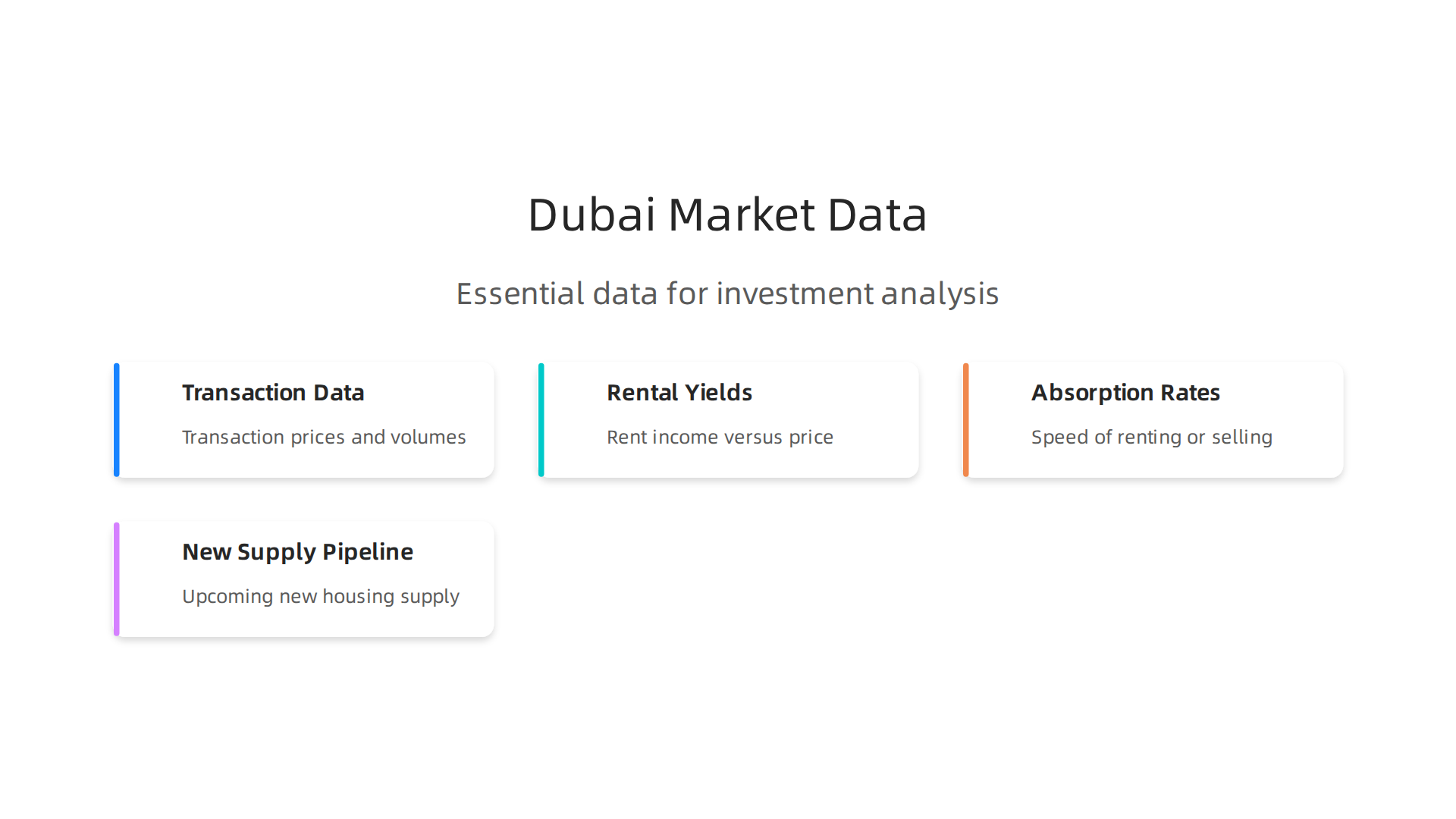
- Transaction Data: This tells you how many properties are being bought and sold, and for what prices. For example, in the first half of 2026, Dubai saw over 79,000 residential sales, totaling AED 221.4 billion Dubai Housing Market 2026: Mid-Year Review & Outlook. Knowing these numbers helps you understand how active the market is and if prices are going up or down.
- Rental Yields: This is about how much money a property makes from rent compared to its price. A good rental yield means a property brings in steady income. If you plan to buy rental properties in Dubai 2026, this data is crucial.
- Absorption Rates: This simply means how quickly properties are rented out or sold once they become available. A high absorption rate shows strong demand.
- New Supply Pipeline: This tells you how many new homes are being built and will come onto the market soon. If too many new homes are built, it could mean more choices for buyers and renters, possibly slowing down price growth or rental income.
By looking at these numbers, you start to get a clear picture of the market. This helps you figure out if a property is a good buy for your financial planning goals.
Making Sure Your Data Is Good
Not all data is created equal. To make good decisions, you need to use reliable information. This means checking where the data comes from and how it is put together. You can use different sources:
- Public Data: This comes from official places like the Dubai Land Department (DLD) or other government reports. For instance, reports from groups like Cavendish Maxwell give updates on residential market performance Dubai Residential Market Performance Q1 2026 – Cavendish Maxwell.

These are often a good starting point.
- Proprietary Data: This is special information gathered by real estate companies or research firms. They might have their own ways of tracking market trends.
- Broker-Sourced Inputs: Experienced real estate brokers often have a deep understanding of local markets. They can offer real-time insights that public reports might miss.
After gathering data from different places, you need to check it all. Does it make sense? Do the numbers from different sources match up? Combining these inputs gives you a much stronger view. This complete data picture then helps you run different "what if" tests, also known as scenario analysis. For example, you can use tools like Monte Carlo simulations to understand risks and possible outcomes for your investment Monte Carlo Simulation in Finance: Modeling Risk and …. This helps you see how well your investment might do under different market conditions.
Building this strong data foundation is truly the first step in successful financial analysis and planning for your Dubai property investments. It helps you avoid surprises and plan for a more secure future. If you are wondering about the support available to help you, understanding what does a financial advisor do for Dubai property investors can give you insights into how experts use this data to help you.
Building on your solid foundation of market data, the next critical step in successful financial analysis and planning for Dubai properties involves understanding the rules. Think of it like knowing the blueprint and local building codes before you even dig the foundation for your house. These rules cover who can own property, what rights tenants have, and how investors can get a residency visa. Knowing these legal details is very important for how you plan your money and your property investments.
Regulatory and Legal Considerations: Tenancy, Ownership and Investor Residency
When you invest in Dubai real estate, you are entering a system with clear laws. The main player here is the Dubai Land Department (DLD), which sets many of the rules for buying, selling, and owning property. They also oversee important changes like the updated investor residency rules for 2026.
Understanding Ownership and Tenancy
First, let us talk about who can own property and how people rent them out. Dubai has specific areas where foreigners can own property freely, known as freehold areas. Outside these areas, ownership rules can be different.
For those who plan to rent out their properties, understanding tenancy laws is key. The Real Estate Regulatory Agency (RERA), which is part of the DLD, has clear rules for how landlords and tenants should act. This includes things like rental contracts, how much rent can increase, and what happens if a tenant needs to leave. Getting familiar with these rules helps you manage your rental income and protects your investment. If you are looking to create a steady income stream, mastering rental management in Dubai is very helpful.
Investor Residency Options
A big draw for property investors in Dubai is the chance to get a residency visa. In 2026, the rules for these visas were updated by the Dubai Land Department through its Cube platform, making it easier for some investors.

Here is what is new and important to know:
- Two-Year Investor Visa: As of 2026, if you are the only owner of a completed residential property in Dubai, there is no set minimum value for the property to get a two-year investor residence visa. The property just needs to be completed and registered in your name with the DLD Dubai Eases 2026 Rules for the Two-Year Property …. This is a big change from before, when a minimum value of AED 750,000 was generally required for sole owners. However, if the property is owned by more than one person, each investor must have at least AED 400,000 worth of the property in their name to qualify for the visa Dubai Property Visa Guide 2026: Updated Rules for 2-Year ….
- Golden Visa (5 and 10-Year Options): For longer-term residency, Dubai offers the Golden Visa.
- A 5-year Golden Visa might be an option if you invest AED 2,000,000 or more in property.
- A 10-year Golden Visa is available for even larger property investments, also starting from AED 2,000,000 Dubai Property Visa 2026: 2-, 5-, 10-Year Tiers Explained – Neginski. This can also include multiple properties that add up to this value Investor Visa in Dubai | 10 Years Residence Visa for Property Owners | DLD Cube.
You will also need things like a passport valid for at least six months, UAE health insurance, and a clean criminal record to be eligible for these visas Investor Visa Dubai 2026: Full Guide on Resdiency by Investment.
Integrating Regulations into Financial Planning
Knowing these legal timelines and required documents is vital for your overall financial analysis and planning.

For example, if you are planning for early retirement financial planning in Dubai using your property, the type of visa you qualify for will affect your long-term stay and how you manage your assets.
You need to factor in the time it takes to process visa applications and other legal paperwork when you make your financial plans. This also impacts your cash flow planning and any exit strategies you might have. If you decide to sell your property later, understanding ownership transfer rules and any related fees will be part of your financial projections. Getting a clear picture of how regulations affect your investments helps you make smarter decisions and avoid surprises.
You have learned that understanding the rules is very important for planning your money and property investments in Dubai. But how do you really see what might happen with your money? This is where advanced tools like financial modeling come in. They help you look deeply into your investments.
Advanced Financial Modeling Techniques for Dubai Property
Financial modeling is like building a very smart map of your money journey. It helps you see all the possible paths and what might be at the end of each one. For Dubai properties, this means making a detailed plan that shows how different parts of the market and your property will affect your money. This is a key part of good financial analysis and planning.
How a Financial Model is Built
Think of building a model as layering different clear sheets of paper on top of each other. Each sheet shows a different part of your investment:
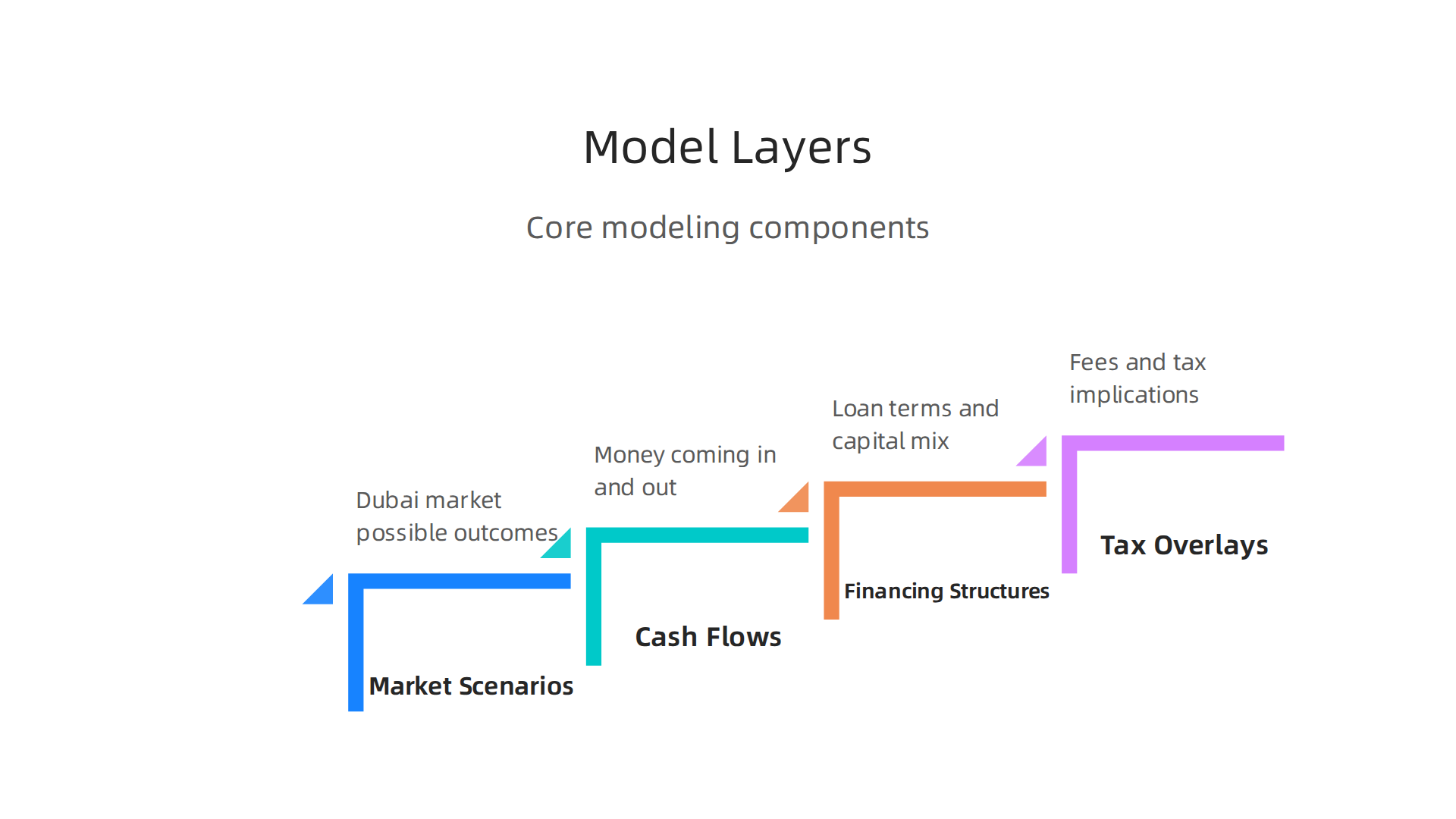
- Market Scenarios: This layer looks at what the Dubai property market might do. It considers things like how much property prices might go up or down. For example, recent reports show strong activity, with over AED 426.8 billion in transactions in the first half of 2026 Dubai Real Estate Market. But a good model also thinks about if the market slows down or gets faster.
- Property-Level Cash Flows: This sheet shows the money coming in and going out from your specific property. This includes rent you receive, and money you spend on things like maintenance, service fees, and any other costs.
- Financing Structures: If you took a loan to buy the property, this layer covers how that loan works. It includes interest rates, how much you pay back each month, and how long it will take.
- Tax Overlays: While Dubai has low taxes, it is good to understand any fees or taxes that might apply now or in the future. This helps you know the true cost of your investment.
By putting all these layers together, you get a full picture of your investment’s health.
Testing Your Investment Plans
Once your model is built, you can use special techniques to test it. These help you understand the risks and rewards better.
- Stress Testing: This is like giving your financial plan a tough exam. You ask, "What if the worst happens?" For example, what if rents fall sharply, or interest rates go up a lot? Stress testing helps you see if your investment can handle hard times. It identifies points of failure under extreme conditions IRR Sensitivity Analysis and Stress Testing: A Practitioner’s ….
- Sensitivity Analysis: This technique lets you change one thing at a time to see how it affects your overall money. What if rent goes up by 5%? What if it goes down by 5%? By changing just one item, you can see which parts of your investment plan are most important or most sensitive to change. This is a common way to predict market risks Using Real Estate Financial Modeling to Predict Market Risks.
- Monte Carlo Scenario Runs: This is a very advanced way to test your plan. Instead of just picking one "worst case" or changing one thing, a Monte Carlo simulation tries thousands of different possibilities at once. It uses random numbers to try many different market conditions, rental incomes, and costs. Then, it shows you a range of all the possible outcomes, from the best to the worst, and how likely each one is. This gives you a much clearer idea of the risks involved. It involves running thousands of simulations to get a range of results based on uncertain inputs Monte Carlo Method – Glossary of CRE Terms. You can even run Monte Carlo Simulations in Excel for Real Estate.
These tools are very important for making smart investment choices in Dubai. They help you move beyond simple guesses and make decisions based on what the numbers really say. If you are wondering what is the cost for a financial advisor in 2026 to help with these complex models, it is an investment that can pay off by protecting your assets and guiding you to better returns.
If you are thinking about buying, selling, renting, or investing in Dubai, getting expert help can make all the difference. Connect with Ayaz Salman for a FREE Dubai Real Estate Consultation.
After using advanced tools like Monte Carlo simulations to look at all the possible ways your investment might go, what do you do with all that information? You need to use special numbers and a helpful checklist to really understand if a property is good for your money goals. This is where different ways of checking value, called valuation metrics, and important Key Performance Indicators (KPIs) come in handy for smart financial analysis and planning.
Valuation Metrics, KPIs, and a Checklist for Investment Decisions
When you’re ready to make a choice about a property in Dubai, you look at a few main numbers. These numbers help you compare different properties side by side.
Important Numbers for Dubai Properties
Think of these as your property’s report card:
- Cap Rate (Capitalization Rate): This is a quick way to see how much money a property might make each year, compared to its price. It helps you guess how long it might take to earn back your investment from rent alone. For example, if a property costs AED 1,000,000 and brings in AED 80,000 in rent each year after expenses, its cap rate is 8%.
- Rental Yield: This shows you how much income you get from rent compared to the property’s cost. For 2026, Dubai’s homes generally offer good rental yields, with apartments often giving around 6.9% back each year Dubai Housing Market 2026: Mid-Year Review & Outlook. This is very important if you want steady income.
- IRR (Internal Rate of Return): This number helps you see the total growth of your money over time, including rent and when you sell the property. It is like an average yearly interest rate for your whole investment. A high IRR means your money is growing fast.
- NPV (Net Present Value): This number tells you if your investment is worth more today than it cost, after you think about all the money coming in and going out over time. If the NPV is positive, it’s usually a good sign. Using this alongside a calculator for financial planning can give you a clearer picture.
For different kinds of properties, some numbers are more useful. For apartments meant for renting, rental yield and cap rate are super important. For big projects or buying land, IRR and NPV give a better long-term view.
Key Performance Indicators (KPIs)
Besides the main valuation numbers, Key Performance Indicators, or KPIs, are like a property’s health trackers. They tell you how well your property is doing in daily life.
- Operating Expense Ratio (OER): This shows how much it costs to run your property compared to the money it brings in. A lower OER means your property is managed well. In Dubai, watching your OER helps make sure you are not spending too much on upkeep Dubai property analysis: Key metrics every investor should ….
- Occupancy Rate: How often is your property rented out? A high occupancy rate means less empty time and more rental income.
- Tenant Retention Rate: How often do good tenants stay for a long time? Keeping tenants happy saves you money because you do not have to find new ones as often. These KPIs are especially important for effective master rental management in Dubai maximize property profitability.
Big investors like REITs (Real Estate Investment Trusts) use these kinds of KPIs to keep an eye on how well their properties are doing and to help them grow their assets Dubai Residential REIT.
A Simple Checklist for Your Investment Decisions
To make your investment choice easier, here is a simple checklist you can use. This helps you compare properties in a clear way.
| Feature | What to Look For | Why it Matters for Dubai Properties |
|---|---|---|
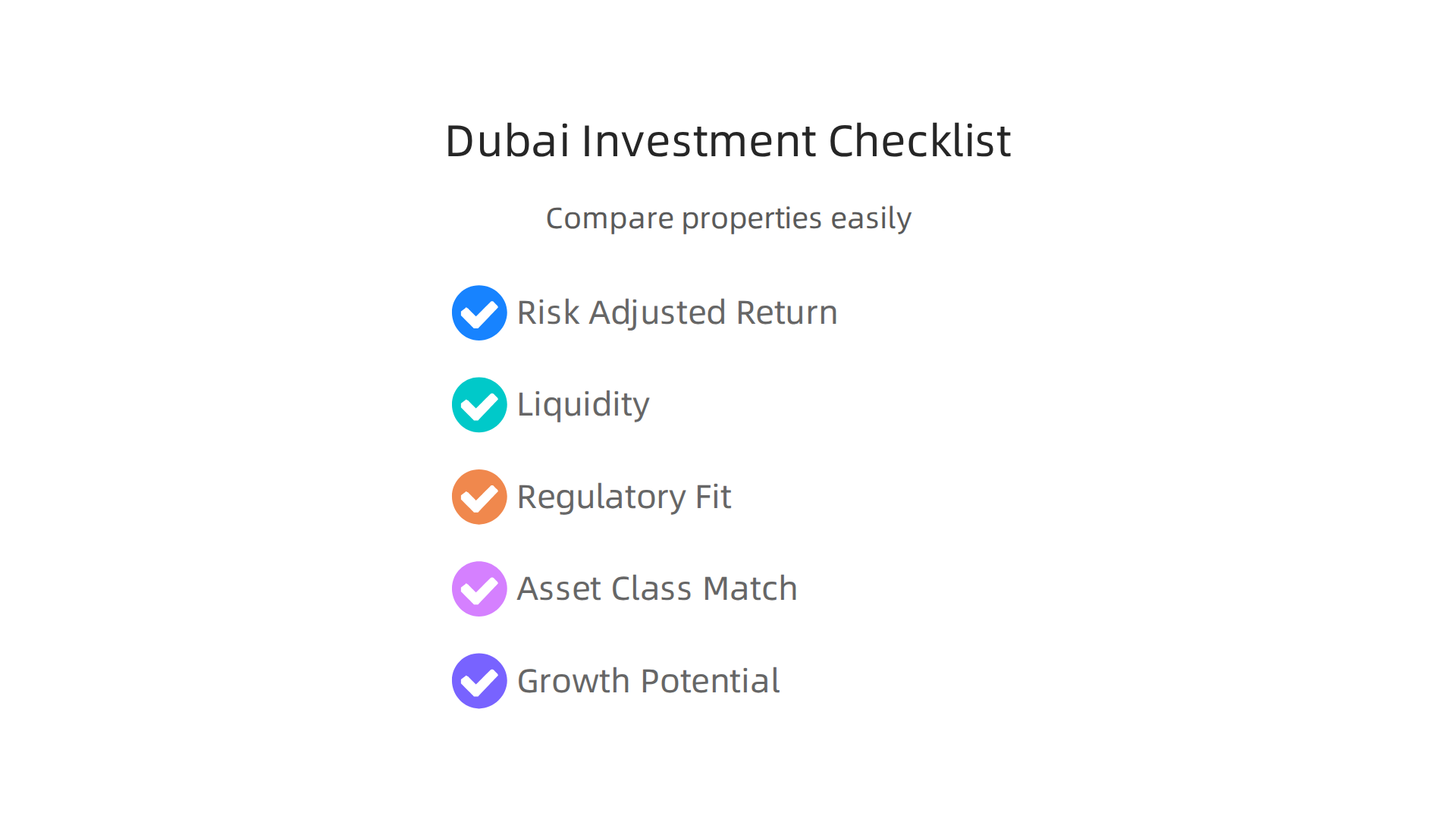
| Risk-Adjusted Return | Does the money you could make match the risk you are taking? (Use results from stress tests and Monte Carlo simulations) | High rewards often come with higher risks. You want a good balance. |
| Liquidity | How easy would it be to sell this property if you needed to? | Some properties are easier to sell than others, giving you flexibility. |
| Regulatory Fit | Does this property fit your plans for investor residency or long-term ownership under Dubai’s rules? | Making sure your investment matches local laws and your goals is key. |
| Asset Class Match | Is it an apartment, villa, or commercial space? Does it fit your investment style? | Each type has different risks and rewards. Residential may be better for rental income, commercial for business growth. |
| Growth Potential | Is the area expected to grow? Will property values likely go up? | This helps with capital appreciation, making your property worth more later. |
By using these numbers and this checklist, you can make smarter decisions based on real data, rather than just hopes. This approach helps you make sure your early retirement financial planning stays on track and you build a strong financial future in Dubai.
When you think about making money from property in Dubai, it’s not just about how much rent you get or how much the property’s value goes up. You also need to think about taxes, especially if you are investing from another country.

This part of your financial analysis and planning is super important because it changes how much money you actually get to keep.
Dubai’s Friendly Tax Rules for Property Owners
Good news first! Dubai has some very helpful tax rules for individuals. For most people investing in property in Dubai, here is what you need to know in 2026:
- No Personal Income Tax on Rent: If you are an individual and you rent out your property, you generally do not pay income tax on that rental money in Dubai. This applies whether you live in the UAE or in another country Dubai’s Zero-Tax Advantage: No Income Tax, No Capital ….
- No Capital Gains Tax: When you sell your property in Dubai, you typically do not pay tax on the profit you make from the sale. This is true for both people who live there and people who live abroad Property Investment in the UAE: Capital Gains Tax Guide for ….
- No Yearly Property Tax: Dubai does not charge a regular yearly property tax on homes, whether you are a local or a foreign owner Property Taxes In Dubai For Foreign Investors.
However, there are still some costs like a one-time transfer fee when you buy, and yearly service charges.
When Taxes Get Tricky: Companies and Other Countries
While Dubai is tax-friendly for individuals, things can change if you own property through a company or if your home country has different tax laws.
- Corporate Tax: If a foreign company owns property in the UAE, it might have to pay UAE Corporate Tax. This means such companies need to register for corporate tax here Foreign Owners Of UAE Property: Pay Tax, Or Become …. This is often 9% on profits for companies Investing in UAE Real Estate: Tax and Financial ….
- Your Home Country’s Taxes: Even if Dubai doesn’t tax your property income or gains, your home country might. For example, US citizens investing in Dubai property still need to worry about US taxes and special reporting rules US Investors in Dubai Property Have Unique Tax Reporting …. The same goes for investors from places like India, who might need to report rental income in their home country.
To avoid being taxed twice on the same money, many countries, including the UAE, have special deals called Double Taxation Agreements (DTAs). These agreements help you understand which country gets to tax your income Your Ultimate Guide to International Property Investment ….
How You Structure Your Investment Matters
The way you choose to hold your property can also make a big difference for your financial analysis and planning.
- Your Name vs. a Company/Trust: You can buy a property in your own name, or you can buy it through a company or a special setup like a trust. This choice can change how much tax you pay and how easy it is to pass on the property later. Using a company, especially for larger investments, might mean extra steps and corporate taxes.
- Reporting Requirements: No matter how you own your property, your home country might still want to know about your assets abroad. Make sure you understand and follow these reporting rules.
Figuring out all these tax and legal details is a big part of smart personal financial planning tips for Dubai property investors. It helps you keep more of your hard-earned money. If you are wondering what is the cost for a financial advisor in 2026 for Dubai property investors, it is a small price to pay for making sure your wealth is managed correctly across borders.
Moving from understanding tax rules to actual residency options adds another layer to your financial analysis and planning. Getting an investor residency in Dubai changes not just how you live, but also how you approach your long-term money goals and even how your taxes work in your home country.
Investor Residency Options for Property Owners
Dubai offers different ways to get a residence visa when you buy property, especially designed for investors who want to live or spend more time here. These visas let you enjoy the benefits of being a resident, which can be great for your overall financial outlook and quality of life.
Here are the main options for property investors in 2026:
- 2-Year Investor Residence Visa: This is a common choice. As of April/May 2026, the rules for this visa have changed to be even more friendly. If you own a property by yourself, there’s no minimum property value needed to qualify for this visa, as long as the property is completed and registered in your name with the Dubai Land Department (DLD) Dubai Land Department – Investor Residence Application …. If you own a property with someone else, each investor needs to have a share worth at least AED 400,000 Dubai Property Visa Guide 2026: Updated Rules for 2-Year ….
- 10-Year Golden Visa: For bigger investors, the Golden Visa offers a much longer stay. To get this, you usually need to invest at least AED 2,000,000 in property Investor Visa in Dubai | 10 Years Residence Visa for Property Owners | DLD Cube. This is a great option for high-net-worth individuals (HNWIs) who want long-term stability in Dubai.
- 5-Year Retirement Visa: If you’re looking at early retirement financial planning, Dubai also offers a 5-year retirement visa, which can be linked to your property investment.
These residency options open up a lot of non-financial benefits too, like easier travel, access to banking, and the chance to set up a business or bring your family. This stability helps you plan your investments and wealth over many years.
Planning Your Residency Journey
Getting a visa involves more than just buying property. You need to gather certain documents and follow a set process. Thinking about these steps is a key part of your financial analysis and planning.
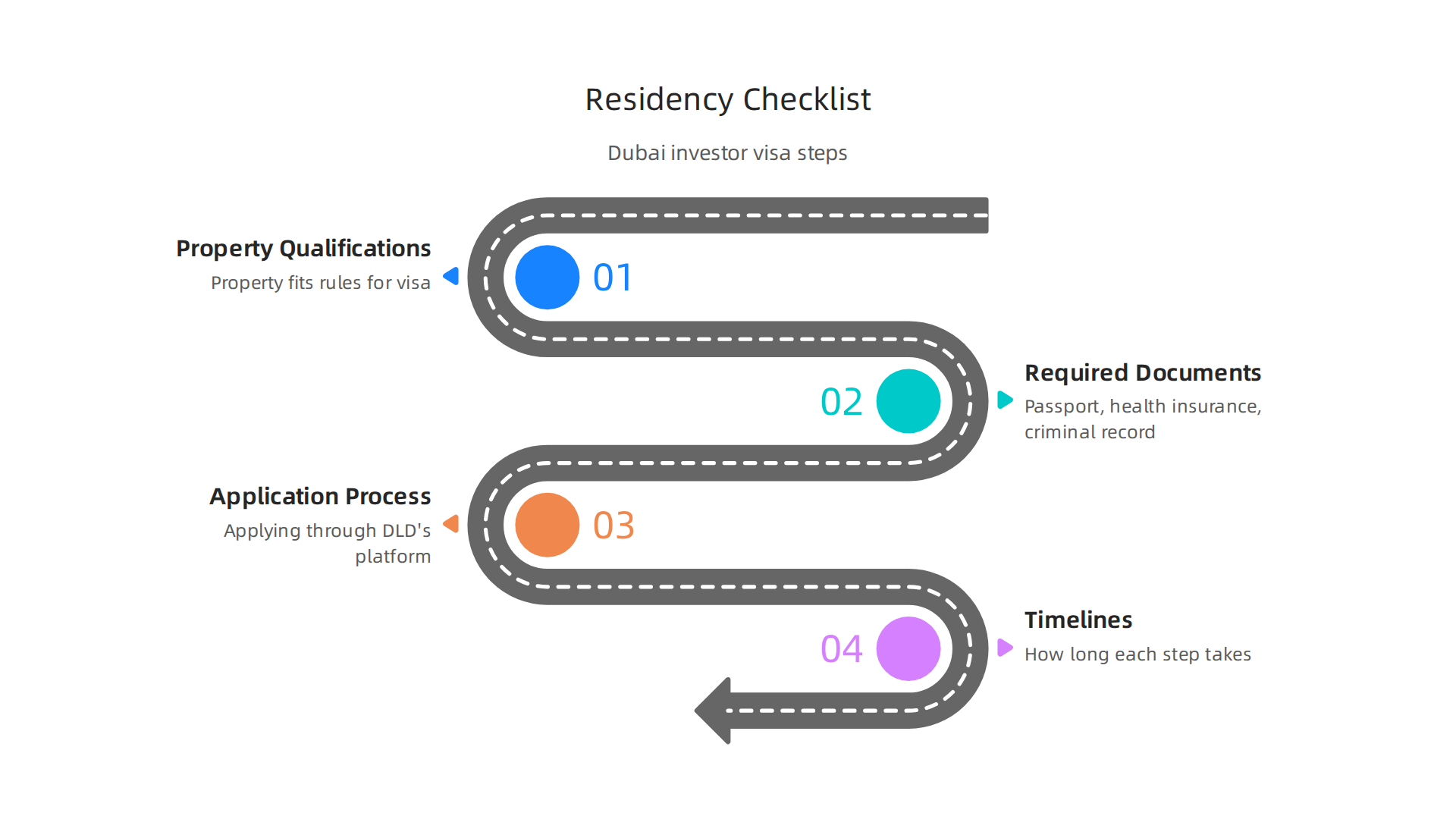
Execution Checklist:
- Property Qualifications: Make sure the property you buy fits the rules for the visa you want. It usually needs to be a completed residential property in a freehold area and registered with the DLD.
- Required Documents: You will need things like a valid passport (at least 6 months left), UAE health insurance, and a clean criminal record. You’ll also need to pass a medical fitness test Investor Visa Dubai 2026: Full Guide on Resdiency by Investment.
- Application Process: The process usually involves applying through the DLD’s platform. There will be fees for the application, medical tests, and ID cards.
- Timelines: Understand how long each step takes. While some processes are fast, planning for a few weeks to a few months is smart.
When you’re doing your financial analysis and planning, think about these costs and timelines. They are a crucial part of your overall budget. A good financial advisor can help you factor these steps into your wealth plan, making sure you have enough funds not just for the property, but also for all the visa-related expenses. You can even use a "calculator for financial planning" to estimate your total spending.
Remember, having a clear plan for your residency and finances together helps you make the most of your Dubai property investment.
Ready to explore how investor residency can fit into your Dubai property strategy? Connect with an expert for personalized guidance.
FREE Dubai Real Estate Consultation
After you have secured your investor residency in Dubai and bought your property, the next big step is making sure that property earns you money.

This is where operational analytics and smart asset management come in. It’s not just about owning the property; it’s about how well you run it. Good financial analysis and planning must include looking closely at how your rental property is performing every day.
Getting the Most Out of Your Rental Property
To truly optimize your rental performance, you need to keep an eye on key numbers, often called Key Performance Indicators (KPIs). These numbers tell you if your property is doing well or if you need to make changes. For example, knowing your occupancy rate is vital. This shows how often your property is rented out. The higher it is, the more money you make. Dubai’s residential market currently offers attractive rental returns, with apartments averaging 6.9% gross rental yields in July 2026 Dubai Housing Market 2026: Mid-Year Review & Outlook.
Other important KPIs include:
- Turnover Costs: These are the expenses you face when a tenant leaves and a new one moves in. This can include cleaning, small repairs, and advertising. Keeping these costs low means more profit.
- Tenant Profiles: Understanding who rents your property helps you set the right rent and keep tenants happy, which can lower how often tenants move out. Property management companies help with things like screening tenants and handling rent collection A Data-Driven Guide to Property Management Companies in ….
- Operational Efficiency: This means doing things in the smartest way to save money and time. New technologies, often called PropTech, can help a lot here. They can automate tasks like lease management and scheduling repairs, making things run smoother and cutting down on manual work Digital Transformation in Dubai’s Real Estate Industry. Many investors now focus on property performance over just the price Dubai Real Estate’s Next Phase: Performance Over Price ….
All these operational details feed into your overall financial analysis and planning. By tracking them, you can better understand your property’s true value and future earnings. You might even use a calculator for financial planning to estimate your expected returns based on these KPIs. If you want to learn more about improving your property’s income, check out our guide on master rental management in Dubai.
Planning for the Future: Asset Management and Exits
Beyond daily operations, smart investors also think about the long game: asset management and exit planning. Asset management means making sure your property stays valuable and continues to grow in worth. This can involve making improvements, keeping up with market trends, and ensuring everything is well-maintained.
Exit planning is about knowing when and how you might sell your property in the future. This includes thinking about:
- Timing: When is the best time to sell to get a good price? This depends a lot on the market.
- Market Cycles: Property markets go up and down. Understanding these cycles helps you decide when to buy and when to sell.
- Liquidity: How easy is it to turn your property back into cash? Dubai’s market is generally active, but some properties might sell faster than others.
- Taxes: While Dubai doesn’t have income tax on property, you still need to consider any taxes in your home country when you sell a property.
Thinking about your exit strategy is a key part of early retirement financial planning for many investors. It ensures your property investments support your long-term money goals. For detailed advice on this and how much will a financial advisor cost, speaking with an expert can help you build a solid wealth plan for your Dubai properties, from buying to managing to selling. For more information on making smart investments, explore our guide on how to buy rental properties in Dubai 2026.
Summary
Dubai’s 2026 property market is active and opportunity-rich, but success for investors requires integrated financial analysis and planning rather than isolated property picks. This article explains what market data to collect—transactions, rental yields, absorption and new supply—how to vet that data, and why combining public, proprietary and broker inputs matters. It walks through key legal and regulatory considerations including tenancy rules, freehold ownership and the updated investor‑residency visas (2‑, 5‑ and 10‑year options), and shows how to fold those constraints into cash‑flow and exit plans. You will learn how to build layered financial models (market scenarios, property cash flows, financing and tax overlays), apply stress, sensitivity and Monte Carlo testing, and use valuation metrics like cap rate, IRR and NPV. The guide also covers tax realities for individuals versus companies, how ownership structures affect outcomes, and the operational KPIs needed to optimise rental income. Finally, it gives a practical checklist for investment decisions and points to where expert advisors can help you execute a resilient Dubai property strategy.