

Introduction: Why Financial Advisor Earnings Matter for Your Career and Investment Decisions
Have you ever asked yourself, "How much does a financial advisor make?" Maybe you’re thinking about becoming one. Or maybe you want to hire one to help with your money. The answer to that question matters for both paths.
Financial advisors help people make smart choices with their money.

In a busy market like Dubai, they play a big role in wealth management. They help with investments, retirement plans, and even buying property. If you want to become an advisor, knowing the pay helps you plan your career. If you want to hire one, understanding their earnings can help you find a trusted partner.
This guide gives you the real numbers. We look at 2026 data from sources like the 2026 Guide to Financial Advisor Salary from Coursera. We cover what affects pay, like experience, location, and certifications. We also share tips for both aspiring advisors and investors.
Speaking of advice, if you are looking at Dubai property investments, getting expert guidance is key. You can connect with Ayaz Salman for a FREE Dubai Real Estate Consultation to find out how a financial advisor can help you grow your wealth.
Also, if you are curious about what advisors actually do in Dubai’s real estate world, check out this page about what a financial advisor does for Dubai property investors. It gives you a clearer picture of the role.
Let’s go. Ready to learn more about financial advisor earnings in 2026.
Financial Advisor Salary Overview: National Averages and Ranges for 2026
So how much does a financial advisor make in 2026? The short answer is: it depends a lot. But the numbers give us a clear picture.
According to the Bureau of Labor Statistics, the median annual wage for personal financial advisors was $102,140 in May 2024. That means half of all advisors earned more than that, and half earned less. The bottom 10% made under $49,990. The top 10% took home more than $239,200.
That’s a huge range. Here’s what drives the difference.
Entry level vs. top producer
New advisors often start with lower pay. They are building their client base and learning the ropes. Many earn between $45,000 and $65,000 in their first few years. Over time, as they build trust and bring in more clients, their income grows.
Top producers who manage large portfolios for wealthy clients can earn $500,000 or more each year. Their income is often uncapped because it grows with the assets they manage.
Fee only, commission, or hybrid
The way advisors get paid makes a big difference in how much they earn.
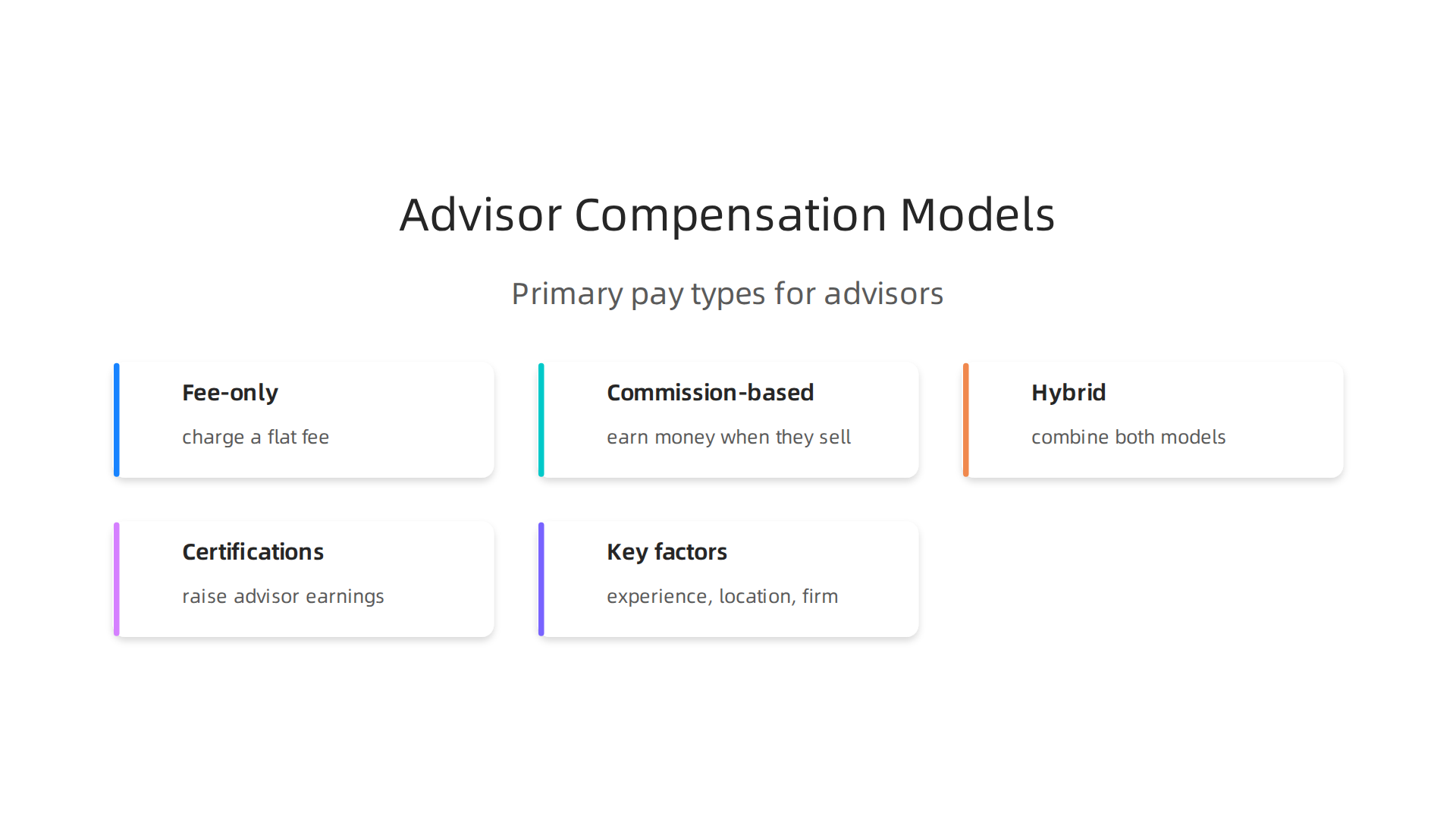
- Fee only advisors charge a flat fee or a percentage of the assets they manage. Their income is steady and based on the size of their client’s portfolio.
- Commission based advisors earn money when they sell financial products like insurance or mutual funds. This can lead to higher income in good years but less stability.
- Hybrid advisors combine both models. They charge fees for planning and earn commissions on certain products.
Understanding these models helps you decide what kind of advisor you want to become or hire. If you are looking for unbiased advice, a fee only model might be the best fit. You can learn more about how that works in our guide to financial advisor compensation in Dubai.
How certifications boost pay
Getting the right credentials can raise your earnings a lot.
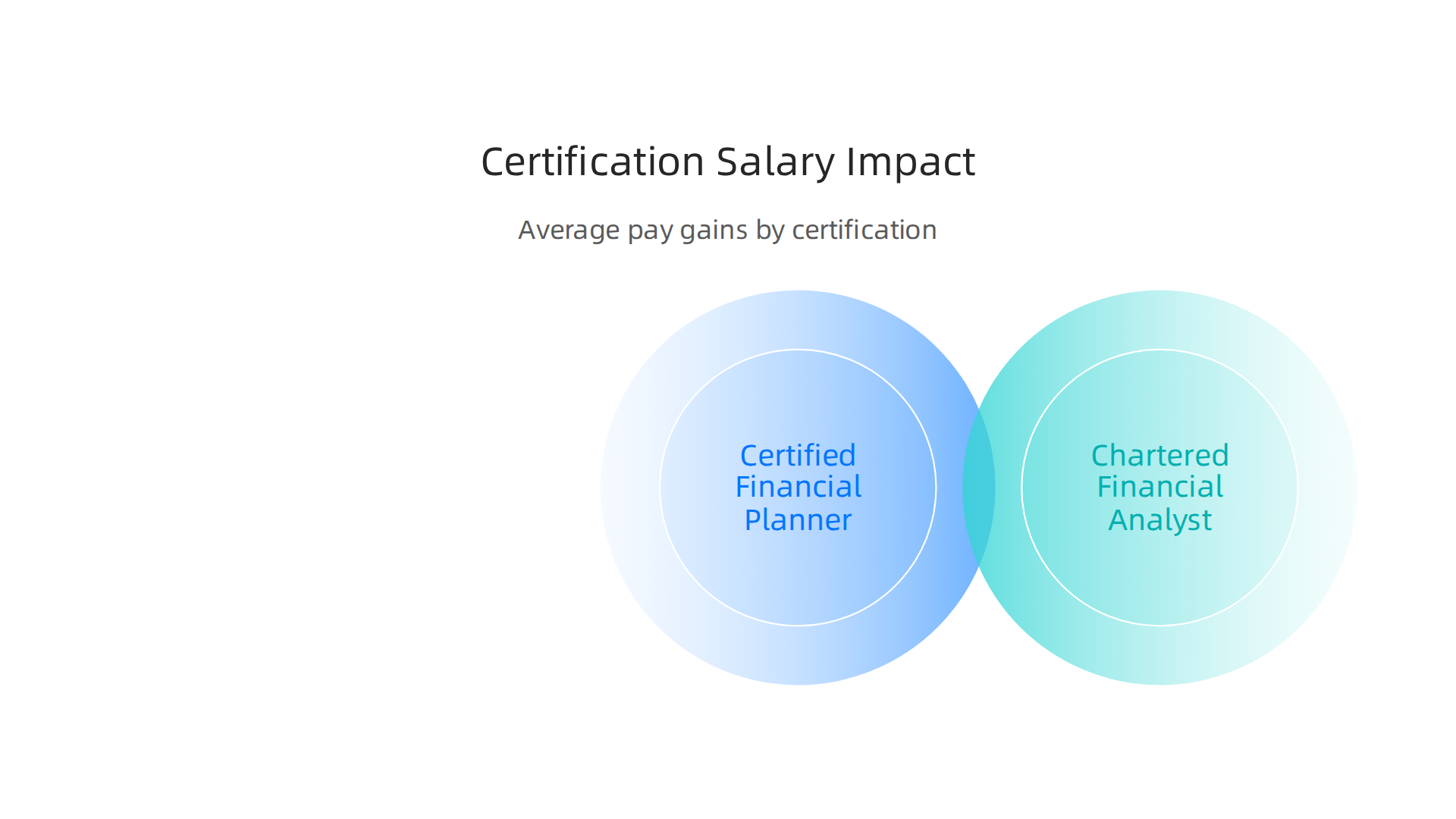
Here are some examples from 2026 data:
- Certified Financial Planner (CFP): Glassdoor reports an average salary of $182,000 for CFPs.
- Chartered Financial Analyst (CFA): CFAs earn an average of $185,000 per year.
- Chartered Financial Consultant (ChFC): This certification also leads to higher pay, often in the $150,000 to $200,000 range.
Earning a certification shows clients you have advanced knowledge. It gives you an edge and can help you charge higher fees.
What this means for you
If you are thinking about becoming an advisor, expect a wide range. Your starting salary may be modest, but your earning potential is huge with experience and the right credentials. If you are hiring an advisor, ask about their compensation model and certifications. That knowledge helps you find someone who puts your interests first.
The bottom line: the answer to "how much can a financial advisor make" is anywhere from $50,000 to over $500,000. It all comes down to experience, where you work, and how you get paid.
10 Key Factors That Influence How Much a Financial Advisor Makes
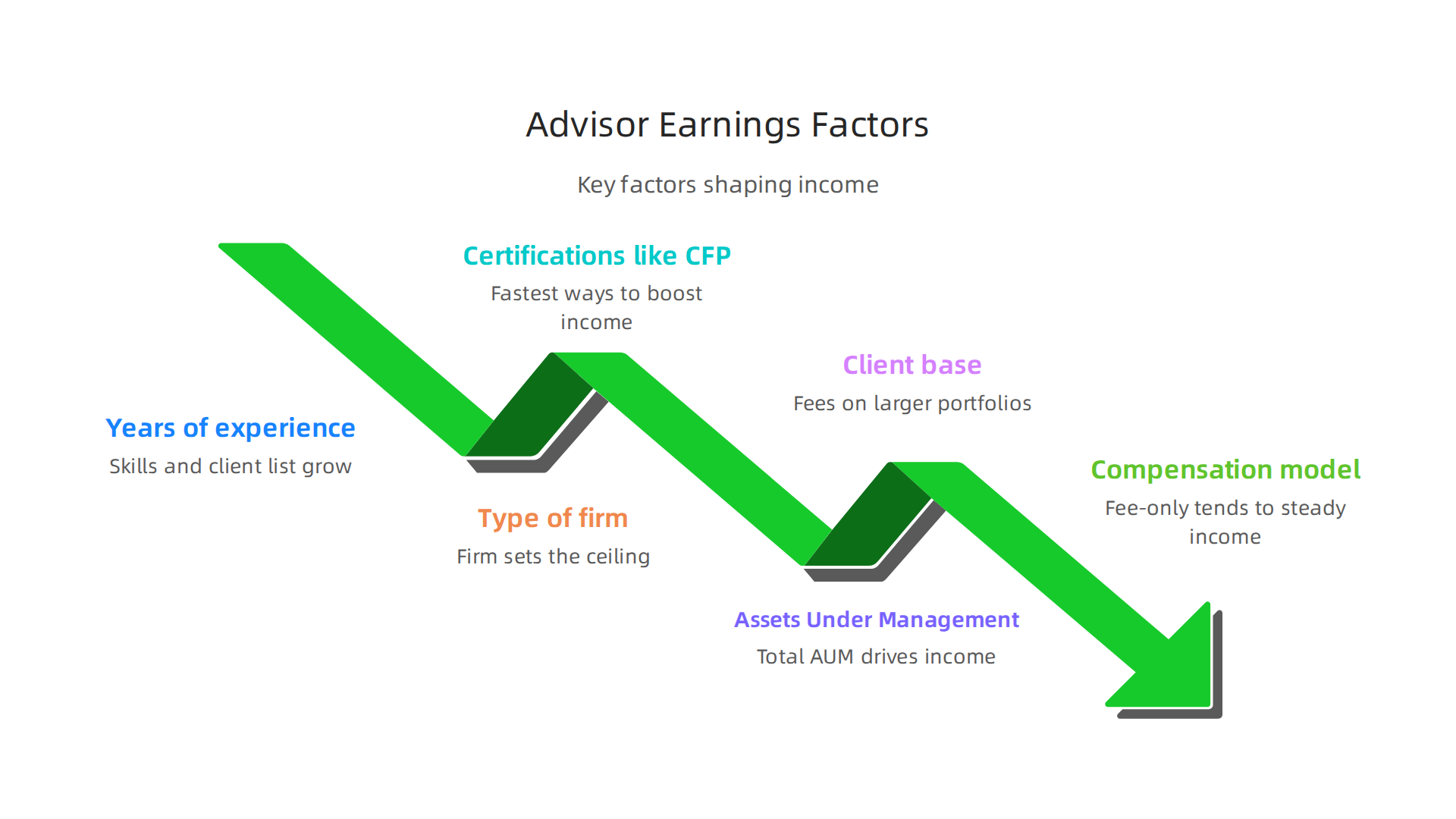
You already know the national averages. But the real answer to "how much does a financial advisor make" depends on a mix of personal choices, market forces, and credentials. Here are the 10 biggest factors that shape that number in 2026.
1. Years of experience
New advisors start around $50,000 to $65,000. With five to ten years of experience, that number often doubles. Seasoned advisors with twenty years can earn well over $200,000. Every year you stay in the business, your skills and client list grow.
2. Certifications like the CFP
A certification is one of the fastest ways to boost income. A study by Michael Kitces found that CFP certified advisors generate substantially more revenue than those without the credential. According to a survey of CFP professionals, 70% report that certification has had a positive impact on their income. That is why many advisors pursue a CFP certified financial planner income impact by earning the designation. Taking a certified financial planning course is often the first step.
3. Type of firm you work for
Where you hang your license matters. Large wirehouses like Merrill Lynch or Morgan Stanley offer high earning potential but require production quotas. Independent RIAs let you keep more of your revenue but you have to bring in the business. Banks and credit unions pay salary plus bonus. The firm sets the ceiling.
4. Client base: mass affluent vs. ultra high net worth
Advisors who work with clients who have $100,000 to $1 million earn a solid living. Those who serve ultra high net worth clients with $5 million or more can earn multiples more. The fees on larger portfolios stack up fast.
5. Assets under management (AUM)
Your total AUM drives a huge part of your income. Charge 1% on $10 million and you earn $100,000 in fees alone. On $100 million, that becomes $1 million. Building AUM is the name of the game.
6. Compensation model
Already covered above, but a quick reminder: fee only tends to give steady, predictable income. Commission based can pay big when sales are good. Hybrid models mix both. Your choice directly answers how much can a financial advisor make.
7. Geographic location
Location changes everything. An advisor in New York City earns more on average than one in rural Kansas. But cost of living eats into that. Regulatory environments also vary. In Dubai, for example, advisors who specialize in real estate can tap into a growing market. If you are curious about building a career there, check out this guide on how to become a financial advisor in Dubai.
8. Specialization
Advisors who focus on a niche like retirement planning, estate planning, or working with doctors often earn more. Generalists compete on price. Specialists charge premium fees because they solve specific problems.
9. Team vs. solo practice
Solo advisors cap out when they run out of hours. Advisors in teams can serve more clients and take home a share of a larger revenue pool. The leverage from a good team can double your income.
10. Marketing and business development
The best financial plan in the world doesn’t matter if no one knows you exist. Advisors who invest in marketing, referrals, and networking attract more clients. That leads to more AUM and higher pay.
These factors stack together. You might have ten years of experience, work at an RIA, hold a CFP, and serve high net worth clients in a major city. That combination can push your earnings toward the top of the range. If you are just starting out, pick one factor at a time to improve.

Thinking about launching your career in a high growth market like Dubai? The opportunities are real. For expert guidance on how to get started, take advantage of a FREE Dubai Real Estate Consultation. It is a simple step toward understanding how the local market works for advisors and investors alike.
Earnings by Career Stage: From Trainee to Top Producer
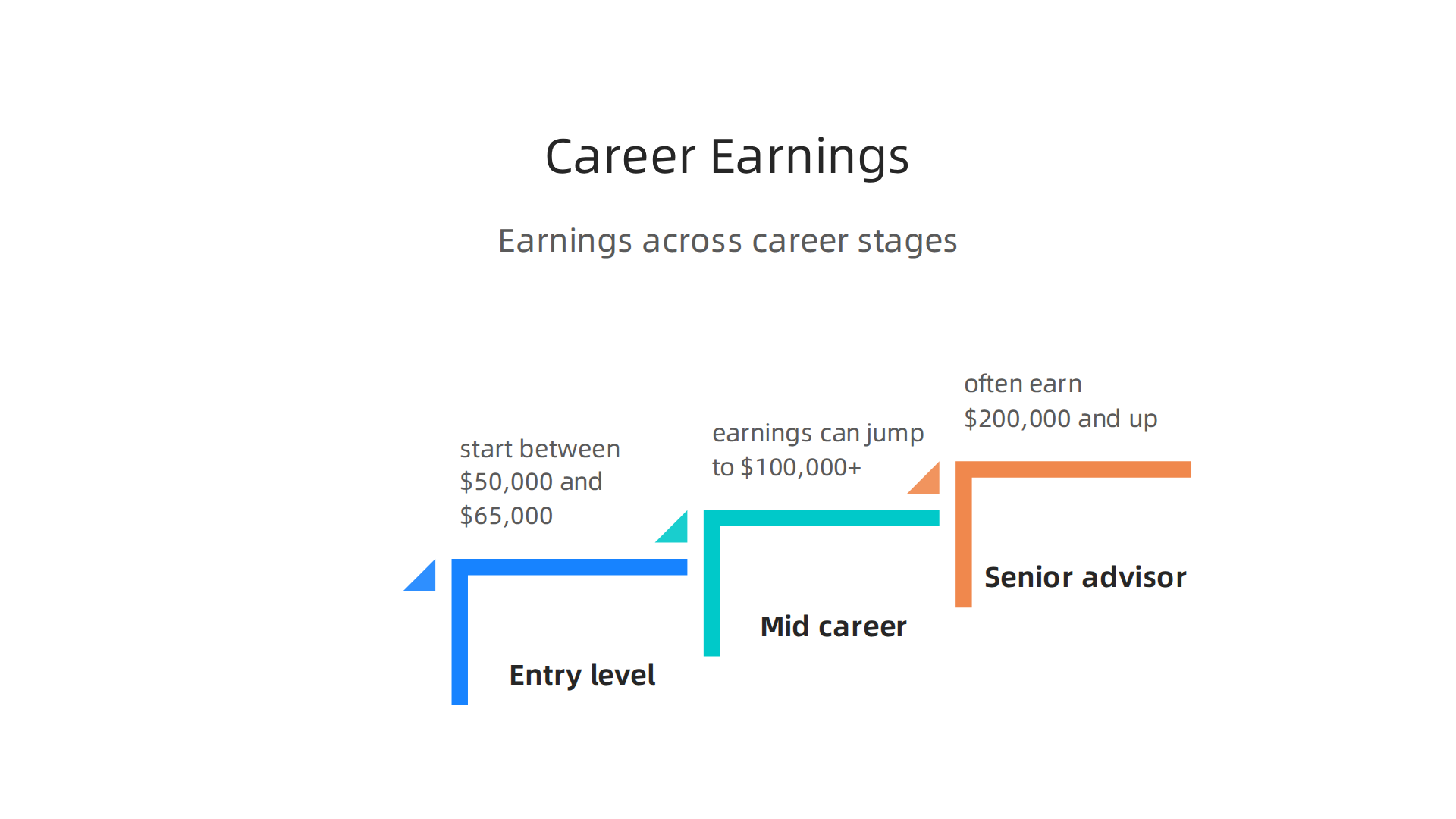
How much does a financial advisor make at each step of the journey? The answer changes a lot depending on whether you are a rookie or a seasoned pro. Let’s walk through the three main stages and see what the numbers look like.
Stage 1: Entry level (years 1 to 3)
New advisors typically start between $50,000 and $65,000. This matches the range most firms pay for new college graduates entering the field. According to recent industry data, associate advisors with 0 to 2 years of experience earn an average of $73,808. But that number varies a lot by region and firm type. You can see the full breakdown in this new financial planner salary data. At this stage, your main job is to build skills, pass licensing exams, and start finding clients. The income is modest but the growth potential is huge. Most trainees work under a senior advisor or inside a team environment. You learn the ropes while earning a base salary plus maybe a small bonus.
Stage 2: Mid career (years 4 to 10)
This is where things change fast. Once you have a few years of experience and a growing book of business, your earnings can jump to $100,000 or more. Advisors who earn a CFP certification see an even bigger boost. The credential helps you charge higher fees and serve clients better. Income jumps often happen when you cross certain production thresholds. At a wirehouse, hitting a higher revenue tier might move your payout from 35 percent to 45 percent. That alone can add tens of thousands to your annual income. The question of how much can a financial advisor make really starts to get interesting here. Many mid career advisors also begin to specialize in areas like retirement or estate planning, which lets them charge premium fees.
Stage 3: Senior advisor and top producer (10+ years)
Advisors who make it past the ten year mark often earn $200,000 and up. The top 10 percent can pull in multiple six figures or even millions. These advisors usually work with high net worth clients and may lead a team. Team structures let them serve more people and share in a larger revenue pool. A senior advisor with $50 million in AUM charging a 1 percent fee earns $500,000 before expenses. The most successful advisors build systems and delegate tasks so they can focus on the biggest clients. In a global market like Dubai, experienced advisors can tap into even more opportunity. If you want to understand the earning potential in that region, read more about financial advisor compensation in Dubai.
The pattern is clear: your income grows as your experience, credentials, and client base grow. Every stage builds on the last one. If you are just starting out, focus on getting through the first few years. If you are mid career, consider earning a CFP or finding a niche. And if you are a senior advisor, look for ways to scale your practice through teams and technology.
How Location Impacts Earnings: The Financial Advisor Salary Map for 2026
Where you live matters more than you might think when asking how much does a financial advisor make. The same advisor with the same experience can earn wildly different amounts depending on their city or country. Let’s look at the numbers.
Big US cities pay more but cost more too
If you work in a major US city, your paycheck will be bigger. The downside is that rent and everyday expenses eat up a larger chunk. According to 2026 data, the top five cities for financial advisor salaries include New York at $111,662 and Boston at $101,333. You can check the full list of cities in this 2026 financial advisor salary guide. But here is the reality check. A $111,000 salary in New York City does not stretch as far as $90,000 in Washington DC because of rent prices. You need to factor in cost of living when comparing offers.
International hubs offer a different kind of opportunity
Now let’s talk about the global picture. International markets like Dubai, Singapore, and London are attracting more financial advisors every year.

The reason is simple. You can earn a competitive salary and keep more of it after taxes. A 2026 study of take home pay across countries showed that a financial analyst earning $75,000 in Dubai keeps the full $75,000. The same person in New York takes home about $59,000. In London, it drops to roughly $52,000. This data comes from a detailed financial analyst salary take home pay comparison across countries.
Dubai stands out because of its zero income tax policy. The Dubai International Financial Centre and Abu Dhabi Global Market free zones offer common law frameworks that make it easier for international firms to set up shop. That means more jobs for qualified advisors.
State and regulatory differences matter too
Even within the United States, state regulations affect how you get paid. Some states require advisors to register separately, which can add compliance costs. Independent advisors in states with lighter regulation may keep more of their revenue. If you are considering an international move, places like Dubai offer a simpler regulatory environment for financial professionals. Our guide on how to become a financial advisor in Dubai explains the process step by step.
The bottom line is that location is one of the biggest factors in how much can a financial advisor make. A move to a high paying city or a tax friendly country can boost your take home income by tens of thousands of dollars each year.
If you are considering making the move to Dubai and want personalized guidance on how to start your wealth journey there, reach out for a <FREE Dubai Real Estate Consultation> — buying, selling, renting, or investing in Dubai, you can get free advice tailored to your situation.
Financial Advisor Earnings in Dubai: Market Insights for 2026
You already know Dubai offers a tax-free salary. But the real story for financial advisors in 2026 goes much deeper. The city has become a magnet for experienced professionals from London, New York, and Singapore. Why? Because the numbers are hard to ignore.
Tax-free income is just the start
A financial advisor earning AED 300,000 per year in Dubai keeps every dirham. No income tax. No capital gains tax on personal investments. That same advisor in New York would take home roughly AED 220,000 after taxes. The difference adds up fast.
But the compensation packages in Dubai often include extras you rarely see in other markets. Many expat advisors receive housing allowances, school fees for their children, annual flights home, and health insurance. When you add these benefits to the base salary, the total value can jump by 30 to 50 percent. The UAE salary guide 2026 from Michael Page confirms that finance roles are among the top paying sectors, with salaries rising around 4 percent this year.
Real estate advisory is the hot niche
Here is where things get interesting for anyone asking how much does financial advisor make in Dubai. The fastest growing niche in 2026 combines wealth management with property guidance. Dubai’s real estate market attracts investors from all over the world who need help structuring their purchases, financing deals, and managing rental income.
Advisors who understand both asset allocation and property law are in high demand. They earn commissions on property transactions plus ongoing fees for portfolio management. This hybrid role can boost annual income well beyond traditional advisory work. It is a smart way to answer how much can a financial advisor make by diversifying income streams.
If you want to understand how compensation works in this sector, check out our guide on financial advisor compensation in Dubai. It breaks down the different pay structures including commission splits, retainer fees, and performance bonuses.
Salaries vary by experience and employer
The average salary for a financial advisor in Dubai in 2026 falls between AED 120,000 and AED 300,000 depending on experience. Entry level advisors with fewer than five years in the field earn around AED 100,000 to AED 150,000. Mid career professionals with a track record and a book of clients can earn AED 250,000 to AED 400,000. Top performers at international wealth management firms often exceed AED 600,000. The financial advisor salary in Dubai 2026 from Glassdoor shows a median around AED 122,000 per year, but that number only reflects base salary without bonuses or allowances.
The real upside comes from building your own client base. Advisors who move to Dubai with an existing network of high net worth individuals or who specialize in a booming sector like real estate can double or triple the average within a few years.
The regulatory environment helps you keep more
Dubai’s financial free zones like DIFC and ADGM operate under common law frameworks. This makes it easier for international firms to set up and for advisors to operate without the heavy compliance burdens found in the US or UK. Lower overhead means advisors keep a larger share of the revenue they generate.
If you are thinking about making the move, the combination of tax free income, generous expat packages, and a booming real estate advisory market makes Dubai one of the most attractive locations for financial advisors in 2026.
Additional Compensation: Bonuses, Commissions, and Benefits That Add Up
Base salary is only one piece of the puzzle when you ask how much does financial advisor make in Dubai. Bonuses, commissions, and soft benefits can turn a good paycheck into a great one. In fact, many advisors earn more from these extras than from their base salary alone.
How bonuses work at Dubai firms
Bonus structures vary by employer. Some firms use discretionary bonuses that depend on your manager’s evaluation at year end. Others use formula-based bonuses tied directly to how much revenue you generate. A third type is profit-sharing, where you get a slice of the firm’s overall earnings.
The way bonuses are calculated has changed in recent years. According to a detailed breakdown of how financial firms calculate advisor bonuses, companies now layer in non-production metrics like client retention and team collaboration. So it is not just about how much you sell. Your bonus also reflects how well you serve your clients and work with colleagues.
Commissions add real firepower
If you work as a broker-dealer rather than a pure fee-only advisor, commissions from product sales can boost your income significantly. Selling insurance policies, mutual funds, or structured products earns you a payout based on a grid. A typical financial advisor payout grid ranges from about 20 percent at the low end up to 95 percent at the high end, depending on your production level.
In Dubai, the real estate advisory niche is where commissions really shine. An advisor who helps a client buy a AED 3 million villa might earn a commission of 1 to 2 percent on top of ongoing portfolio management fees. That single transaction could add AED 30,000 to AED 60,000 to your annual income. No wonder advisors who specialize in property are earning more than generalists.
Soft benefits that save you money
Dubai firms also offer soft benefits that add real value. Many cover the cost of continuing education, including certifications like the CFA or CFP. They pay for conference travel to events in Singapore, London, or New York. Some even contribute to your retirement savings through a gratuity fund or offshore pension plan.
These benefits matter because they improve your skills and expand your network. A certification paid for by your employer can lead to higher earnings down the road. Conference trips help you meet clients and partners who generate new business.
If you are thinking about entering this field, understanding the full compensation picture is crucial. Our step-by-step guide on how to become a financial advisor in Dubai walks you through the process of landing a role that includes strong bonuses and benefits.
Putting it all together
When you add up base salary, bonuses, commissions, and soft benefits, the total value of a financial advisor role in Dubai often exceeds the base number by 30 to 50 percent. That is how much can a financial advisor make when you factor in everything.
If you are looking to maximize your earnings through the real estate niche, getting expert guidance can help you move faster. Reach out today for a free Dubai real estate consultation and learn how to structure your advisory practice for top-tier income in 2026.
How to Increase Your Earnings as a Financial Advisor: Proven Strategies for 2026
Now that you see the full picture of what a financial advisor can earn in Dubai, the next question is how to push those numbers higher. The good news is there are proven ways to grow your income year after year. Let us look at three strategies that work best in 2026.
1. Pick a niche and own it
Generalists compete on price. Specialists command premium fees. If you focus on one client group, you can charge more because your expertise is deeper and your reputation is stronger.
The most profitable niches in 2026 include retirement planning, high net worth individuals, and real estate advisory. According to industry data, 70 percent of top financial advisors saw a major income boost after choosing to specialize. In Dubai, the real estate niche is especially powerful because property investments are a top priority for both local and international clients.
If you already work with property investors, leaning into that specialty can raise your fees and attract bigger clients. Our guide on how to become a financial advisor in Dubai for the 2026 real estate market walks you through how to position yourself in this high demand niche.
2. Earn advanced designations
Certifications like the CFP, CFA, and CPWA are not just titles. They directly increase your earning power. The 2026 Financial Planning Industry Trends Survey found that professionals reported an average 21 percent increase in earnings right after earning their latest financial designation.
That is a huge jump. A certification paid for by your employer (as mentioned in the previous section) becomes an investment that pays for itself many times over. If you are wondering how much can a financial advisor make with a CFP, the answer is significantly more than without it.
3. Build your personal brand with technology
In 2026, clients find advisors online first. If you do not have a digital presence, you are invisible to the best prospects. Use social media platforms like LinkedIn and Instagram to share content that shows your expertise. Post about market trends, client success stories, and educational tips.
Create a website that clearly states your niche and the problems you solve. Use video to build trust faster. A consistent content strategy makes you visible to ideal clients and positions you as an authority.
The job market for financial advisors is growing fast. According to the Bureau of Labor Statistics, employment of personal financial advisors is projected to grow 10 percent from 2024 to 2034. That means more opportunities for advisors who stand out.
By picking the right niche, earning advanced credentials, and building your brand online, you can answer the question how much can a financial advisor make with a number that keeps climbing year after year.

Summary
This article explains how much financial advisors earn in 2026, why pay varies so widely, and what that means for both aspiring advisors and clients who hire them. It reviews national averages and ranges, compensation models (fee‑only, commission, hybrid), and the salary impact of certifications like the CFP and CFA. The guide breaks earnings down by career stage, shows how location—especially Dubai’s tax‑free environment—changes take‑home pay, and highlights bonuses, commissions, and soft benefits that lift total compensation. You’ll learn the ten key factors that drive pay, practical strategies to raise your income (niche, credentials, personal brand), and specific market insights for Dubai’s growing real estate advisory niche. After reading, you’ll be able to evaluate offers, choose a compensation model, and plan clear next steps to grow earnings in 2026.