

Introduction: The Growing Demand for Financial Advisors in Dubai
Dubai is growing fast. More people are moving here for work and investment. The real estate market is booming, and wealthy families and expats are building their futures in this city. All of this creates a strong need for qualified financial advisors who understand both investments and property markets.

If you are wondering how become a financial advisor in Dubai, you are not alone. Many people want to enter this field, but the path can be confusing. There are many certifications to choose from, regulatory rules to follow, and years of experience to gain. It is easy to get lost.
This guide is here to help. We will give you a clear, step-by-step roadmap. You will learn about education, licensing, specialization, and career growth in Dubai’s financial advisory world.
The demand for advisors is real. According to the LinkedIn 2026 Jobs on the Rise report, financial advisor roles are growing fast. People want advisors who can help with big money decisions like retirement, debt, and estate planning. In Dubai, this demand is even higher because of the cross-border nature of many clients’ finances.
A good advisor does more than pick stocks. They help clients align money with life goals. They also guide property investments, which is a major part of wealth in Dubai. To understand this better, read about what a financial advisor does for Dubai property investors.
In the next sections, we will break down the exact steps to get started. You will learn about certified financial planning certification options, the role of the DFSA and SCA regulators, and how to build a career from beginner to expert. Let’s begin with the core financial planning definitions and what the job really involves.
Understanding the Financial Advisory Landscape in Dubai
Dubai’s financial world is not one size fits all. If you want to understand how become a financial advisor here, you first need to know what kinds of advisors exist and who they work for. The landscape is more layered than most people expect.
Types of financial advisors in the market
Not all advisors do the same job. Here are the main roles you will find in Dubai:
- Wealth managers. These professionals work with high-net-worth clients. They handle large portfolios, estate planning, and tax strategies. They often work for private banks or boutique firms.
- Investment advisors. They focus on stocks, bonds, and other securities. Their job is to build and manage investment portfolios for individuals and institutions.
- Real estate financial consultants. This is a big one in Dubai. These advisors help clients buy, sell, and finance property. They understand the Dubai property market and how real estate fits into a broader wealth plan. If you go this route, you might want to read about how to choose a fiduciary financial advisor in Dubai for property to understand what makes a trustworthy consultant.
- Independent financial advisors. They are not tied to one bank or product provider. They can recommend solutions from across the market. This freedom helps them put client interests first.
Each path requires different skills and licenses. The demand for these roles keeps rising. The Financial Advisor Jobs Hiring Demand in 2026 report from BrokerHunter shows that the RIA industry is hiring fast. Dubai mirrors this global trend with its own local demand.
Who are the key players?
The Dubai market has several types of firms where advisors build their careers:
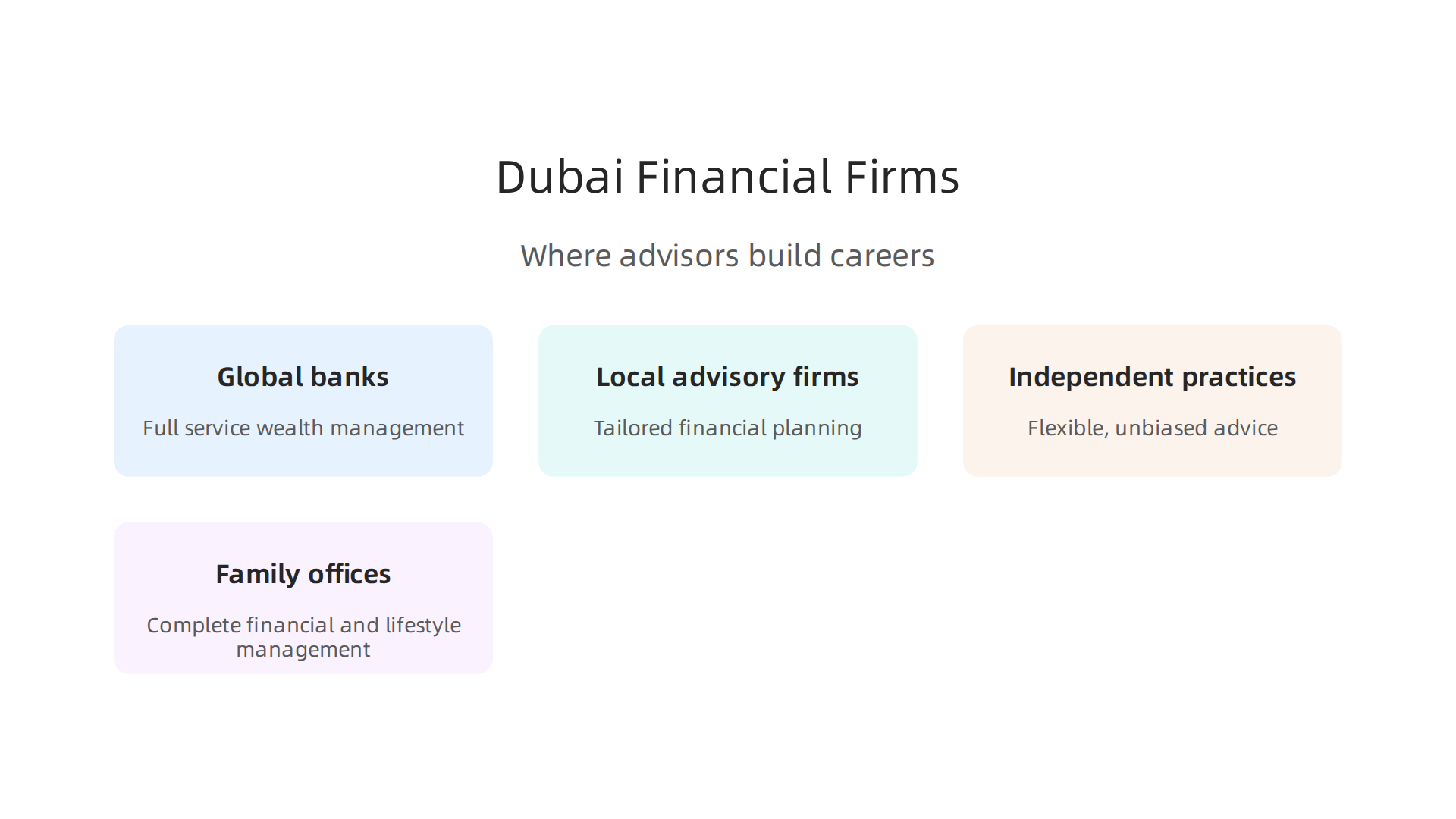
| Type of Firm | What They Do | Who They Serve |
|---|---|---|
| Global banks | Full service wealth management | Ultra-high-net-worth clients |
| Local advisory firms | Tailored financial planning | Expats and local professionals |
| Independent practices | Flexible, unbiased advice | Anyone seeking fiduciary guidance |
| Family offices | Complete financial and lifestyle management | Wealthy families |
New advisors often start at larger firms. These offer training, compliance support, and a built-in client base. As you gain experience, you might move to an independent practice or start your own.
How regulation shapes the role
Dubai is regulated by two main bodies. The Dubai Financial Services Authority (DFSA) oversees firms in the Dubai International Financial Centre (DIFC). The Securities and Commodities Authority (SCA) regulates onshore financial services. Both require advisors to meet strict standards.
The Best Financial Advisors in Dubai and the UAE 2026 Guide from Vault explains that the most trusted advisors work under DFSA or FSRA oversight. These regulators enforce fiduciary rules. That means advisors must put your interests ahead of their own commissions.
Here is the thing. Not everyone who calls themselves a financial advisor in Dubai is regulated. The title is not protected by law. So clients are told to verify credentials through the regulator’s public register. As an aspiring advisor, proving you understand and follow these rules will set you apart.
If you are thinking about specializing in real estate financial consulting, this is a perfect time to explore your options. Whether you are just starting the journey of how become a financial advisor or you already have experience, the landscape in Dubai offers many doors. Finding the right path depends on knowing yourself first.
FREE Dubai Real Estate Consultation
Educational and Certification Pathways to Becoming a Financial Advisor
Now that you understand the types of advisors and regulations in Dubai, let’s talk about how you actually get qualified. The path to becoming a financial advisor here is clear if you know the steps.
Start with the right academic background
Most advisors begin with a bachelor’s degree. Common majors include finance, economics, accounting, or business administration.

A degree in these subjects gives you the basic knowledge you need for the job.
Does your degree have to be in finance? Not always. Some advisors come from engineering, law, or even psychology. But a finance or business degree makes the journey faster. Many employers in Dubai list a bachelor’s in a related field as a must have. You can see this in many job postings for financial advisors in Dubai.
Globally recognized certifications
Once you have your degree, the next step is getting certified. The most trusted credential worldwide is the Certified Financial Planner (CFP) designation.
The CFP requires you to complete a registered education program, gain 6,000 hours of professional experience (or 4,000 through an apprenticeship), and pass a comprehensive exam that covers retirement, tax, estate, insurance, and investment planning. You can read about the best financial advisor certifications in 2026 to compare your options.
Another strong option is the Chartered Financial Analyst (CFA) program. It takes about four years to finish all three levels. It focuses heavily on investment analysis and portfolio management. This is a good fit if you want to work as an investment advisor at a global bank or asset management firm.
The CISI (Chartered Institute for Securities & Investment) offers certifications that are well known in the UK and the Middle East. These include the International Certificate in Wealth & Investment Management. This is a shorter path that many advisors in Dubai use to meet local regulatory standards.
Local certifications and courses
Dubai has its own certification options too. The Emirates Institute of Finance offers local programs approved by the DFSA. These include the Wealth Management Certification UAE, which covers UAE specific regulations and practices. This is a smart choice if you plan to work onshore in Dubai.
If you want to specialize in real estate financial consulting, you should look into RERA (Real Estate Regulatory Authority) qualifications. These are required for anyone giving real estate advice in Dubai. They teach you about property laws, market trends, and how to guide clients through buying and selling.
Getting the right credentials is the most important part of how become a financial advisor in Dubai. The market respects certified professionals. Your certifications prove you know the rules and you put clients first.
If you are curious about what a financial advisor does for Dubai property investors, it helps to understand how these credentials apply to real world situations. The more you learn, the better you can serve your future clients.
Regulatory Framework and Licensing Requirements for Financial Advisors
Getting certified is only half the story. To work as a financial advisor in Dubai, you must also follow the local rules. The main regulators are the Securities and Commodities Authority (SCA) and the Dubai Financial Services Authority (DFSA).
Each one sets the standards for who can give advice and how they must behave.
Who regulates financial advisors in Dubai?
If you work inside the Dubai International Financial Centre (DIFC), the DFSA is your regulator. Outside the DIFC, the SCA handles licensing. Both bodies require you to hold a valid license before you can give financial advice. According to the legal overview on SCA licensing, the SCA has been regulating financial consultants since 2008. This means every advisor must apply and meet strict criteria before offering services.
How to get your individual license
The process is step by step. First, you or your employer must get initial approval from the SCA.
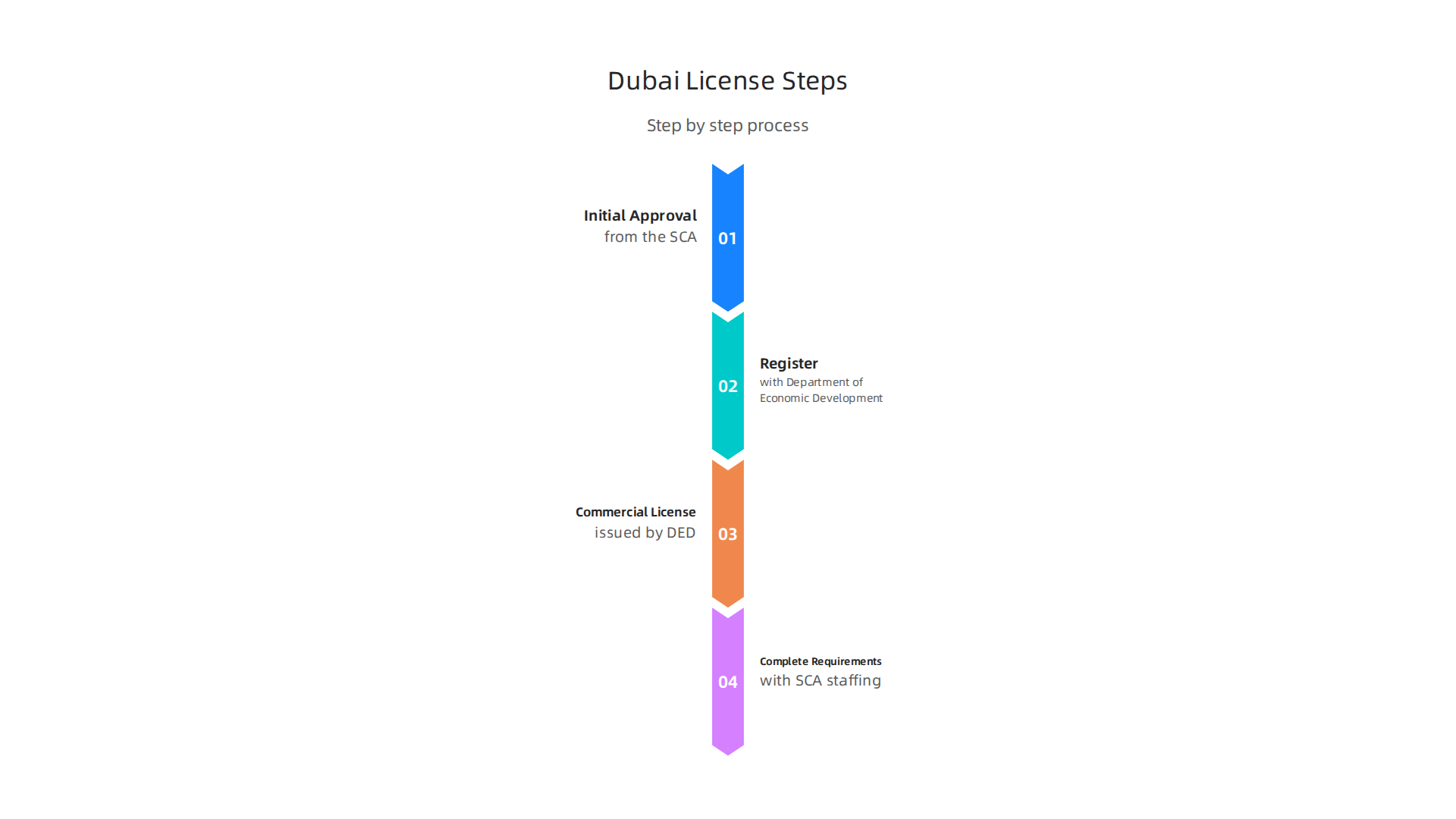
Then you register with the Department of Economic Development. After that, a commercial license is issued. Finally, you return to the SCA to complete staffing and regulatory requirements.
For individuals, you need to pass prescribed tests and show good conduct. Your credentials from the certification step also matter. The SCA checks your qualifications and experience before granting the license.
What happens after you get licensed? Ongoing compliance
Your work does not stop once you hold the license. The DFSA and SCA require you to meet ongoing obligations. This includes continuing professional development (CPD). You must keep learning to stay updated on laws, products, and ethics.
You also need to follow strict ethical standards. Advisors must put client interests first. The code of ethics covers honesty, fairness, and confidentiality. If you break the rules, you can lose your license.
Another key rule is client money protection. You cannot mix client funds with your own. All client money must be held in separate accounts. Regulators audit these accounts regularly.
If you plan to advise on real estate investments, you also need to understand RERA rules. But the SCA and DFSA licenses give you the authority to offer broad financial advice. Once you are licensed, you can help clients with property portfolios, retirement plans, and more.
Ready to work with a licensed advisor?
If you are buying, selling, renting, or investing in Dubai, working with a properly licensed advisor makes a big difference. They understand the rules and can guide you safely. You can connect with a qualified professional for a FREE Dubai Real Estate Consultation to start your journey with confidence.
For more on choosing the right expert, read our guide on how to choose a fiduciary financial advisor for property investments in Dubai.
Essential Skills and Experience for Success as a Financial Advisor
Getting your certifications and licenses is just the start. To truly succeed as a financial advisor in Dubai, you need a mix of hard skills, real world experience, and people skills. If you want to learn how become a financial advisor who clients trust and regulators respect, focus on building these three areas.
Core competencies every advisor needs
First, you must master the technical side. This means strong financial analysis skills. You need to read financial statements, understand market trends, and know how different investments work. Product knowledge is also critical. You should know how stocks, bonds, real estate, and insurance products fit into a client’s plan. And because Dubai has its own rules, regulatory literacy is non negotiable. You must stay current with SCA, DFSA, and RERA requirements.
Employers in Dubai look for candidates with a bachelor’s degree in finance, accounting, business, or economics. Many also want professional certifications like the Certified Financial Planner (CFP) or Chartered Financial Analyst (CFA). According to the job requirements for financial advisors in Dubai listed on Indeed, companies specifically ask for excellent communication skills, fluency in English, and strong analytical abilities.
Practical experience makes the difference
Book knowledge will only take you so far. The best advisors gain experience through internships, junior analyst roles, or by shadowing senior advisors. These opportunities teach you how to handle real clients, manage actual portfolios, and navigate the day to day operations of a financial firm. Even one to three years of professional experience in financial services can set you apart from other candidates.
Many advisors start at banks or wealth management firms before moving to independent practice. If you are new, look for training programs that combine classroom learning with on the job mentoring. This hands on approach helps you build confidence and credibility.
Soft skills that separate top advisors
Dubai is home to people from over 200 nationalities. That means you will work with clients from different cultures, languages, and financial backgrounds. To succeed, you need strong communication skills. You must explain complex ideas in simple terms that anyone can understand.

Empathy is just as important. Clients often come to you during stressful times like retirement planning or big property purchases. They need someone who listens and understands their fears. Negotiation skills help you get better deals for clients and resolve conflicts. And cultural awareness lets you build trust with people from all over the world.
If you want to see how these skills come together in practice, read more about what a financial advisor does for Dubai property investors. It shows how advisors combine technical knowledge with people skills to guide clients through real estate decisions.
Remember, success as a financial advisor is not just about passing exams. It is about building relationships, understanding your clients deeply, and always putting their interests first. Focus on developing both your technical abilities and your soft skills, and you will be on the right path.
Specialization Opportunities: Integrating Real Estate and Wealth Management
Once you have the core skills down, the next step is to choose a specialty. In Dubai, one of the most powerful paths you can take is combining real estate advisory with financial planning. This mix creates serious value for clients and sets you apart from other advisors.
Why real estate plus wealth management works so well in Dubai
Dubai’s property market attracts investors from all over the world. Many of these buyers are high net worth individuals who need more than just a real estate agent. They want a trusted advisor who can help them see how a property fits into their full financial picture. That includes tax planning, estate planning, and long term portfolio growth. When you understand both sides, you become the go to person for clients who need a complete strategy.
This kind of specialty also makes your services harder to replace. Most financial advisors focus only on stocks and bonds. Most real estate agents focus only on buying and selling. But very few professionals bridge the two worlds. That gap is your opportunity.
Pathways to becoming a real estate focused advisor
To build this specialty, you need specific credentials and knowledge. Start by getting your RERA certification. This is required by Dubai’s Real Estate Regulatory Authority and shows clients you understand local property laws. Next, study property valuation. Learn how to estimate a property’s market value, rental yield, and long term appreciation potential. Finally, dig into cross border tax implications. Many of your clients will be expats or international investors who need advice on how Dubai property affects their taxes back home.
One excellent resource is the Wealth Management Certification UAE offered by the Emirates Institute of Finance. It covers portfolio management, risk assessment, and client communication, all of which apply directly to advising property investors.
A successful case in point: An advisor I know started by helping a British expat buy a villa in Palm Jumeirah. Instead of just handling the purchase, she built a full wealth plan around it. She showed the client how the property could generate rental income, how to structure ownership for tax efficiency between the UK and UAE, and how to plan for passing the villa to his children. That client now refers all his friends to her. She built her entire practice around property linked portfolio management.
If you want to see how this kind of integrated advice works in practice, check out this guide on what a financial advisor does for Dubai property investors.

It walks through real scenarios that show the value of combining real estate and finance.
Your next step
The demand for advisors who can handle both wealth management and real estate is growing fast. If you are ready to stand out in this space, getting expert guidance early can save you months of trial and error. For a free consultation on how to start or grow your practice around Dubai property, click here: FREE Dubai Real Estate Consultation.
Step-by-Step Roadmap: From Aspirant to Practicing Financial Advisor in Dubai
So you want to know how become a financial advisor in Dubai. It is a rewarding journey, but it does not happen overnight. You need a clear plan. This section breaks down the journey into three stages. It covers the timeline, the certifications, and the real world moves you need to make to build a trusted practice.
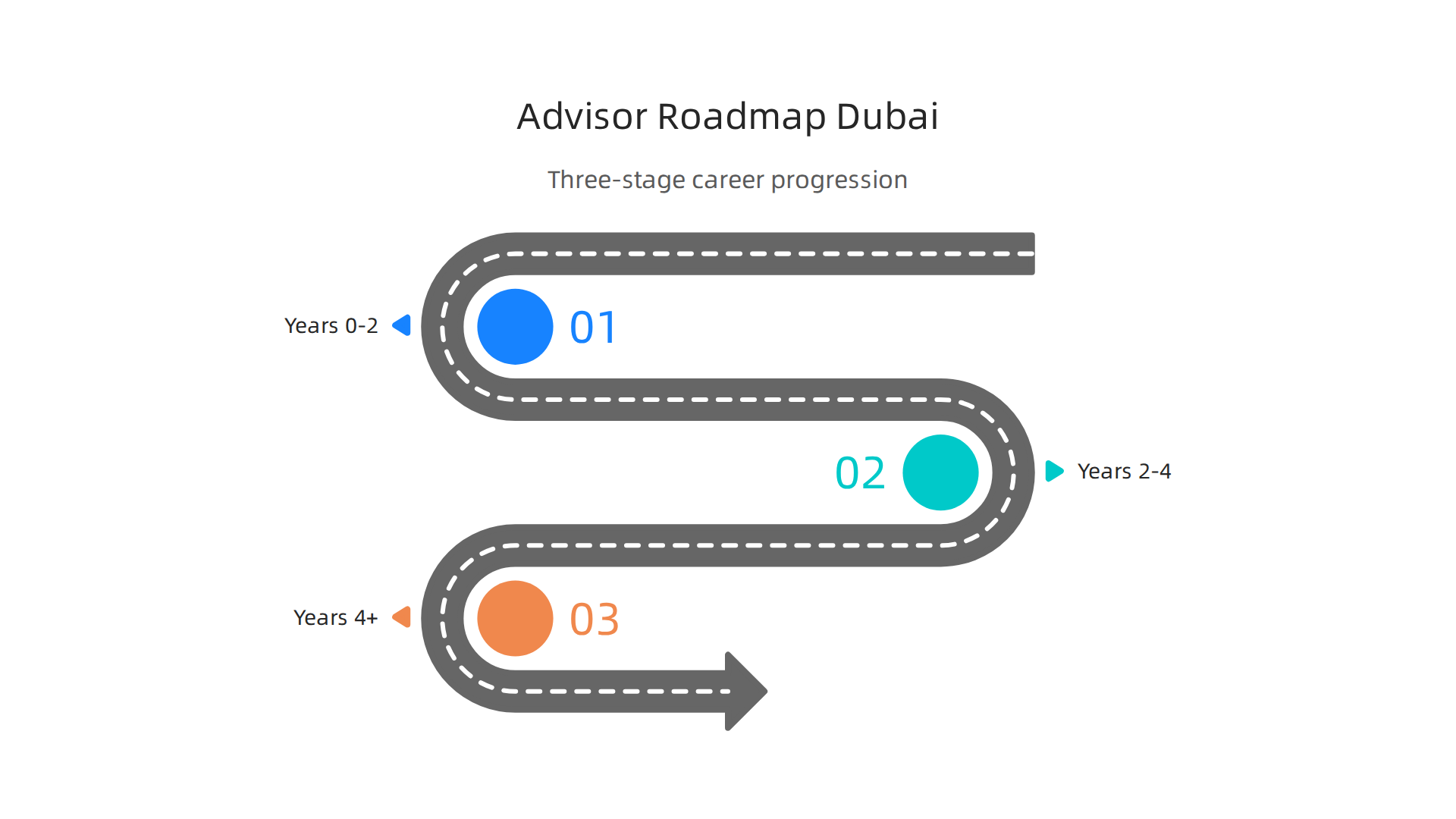
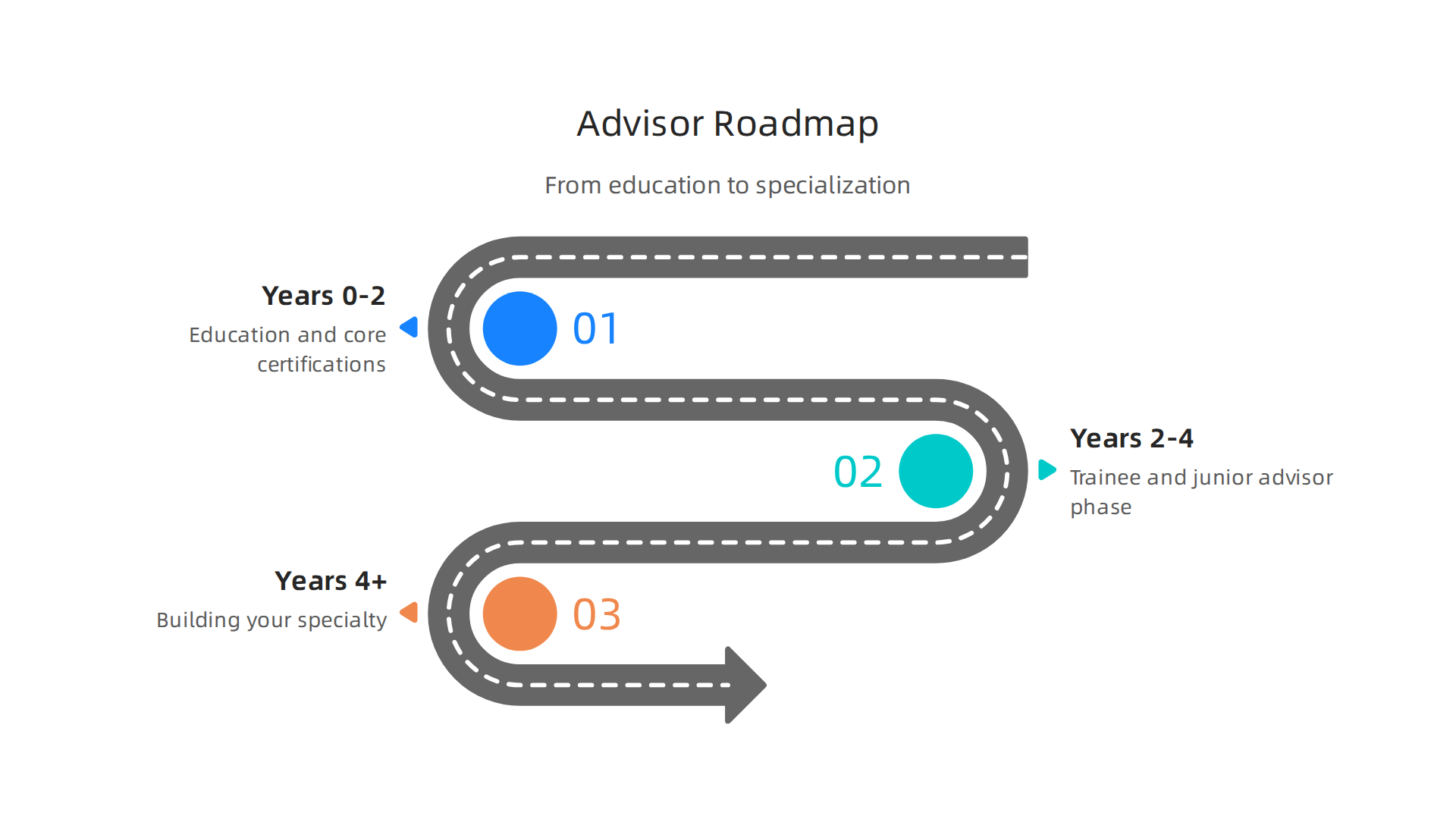
Years 0 to 2: Education and Core Certifications
The first step is building your knowledge. Most successful advisors start with a degree in finance, business, or economics. While you study, it helps to get a clear picture of the career. Many guides outline the steps to become a financial advisor. That is a great starting point for understanding the different credentials available globally.
In Dubai, the Certified Financial Planner (CFP) certification or the Chartered Financial Analyst (CFA) program are highly respected. You also need to register with the Securities and Commodities Authority (SCA) or the Dubai Financial Services Authority (DFSA) depending on where you work. Getting a solid grasp on core financial planning definitions is critical at this stage. You are building the foundation for everything else.
Years 2 to 4: The Trainee and Junior Advisor Phase
This is where you put your knowledge to work. You join a firm as a trainee. Your main goal is to learn how to talk to clients, generate leads, and build trust.
Many large firms offer structured development programs to help advisors grow. You might look at a JPMorgan financial advisor development program to see how top institutions train their people.
During this phase, you learn the specific needs of Dubai clients. Expats have unique life cycles. They arrive, build careers, buy property, plan for retirement, and often move back home. Understanding this cycle is key. Creating a strong financial planning sample for your clients is a skill you refine here. If you want to dig deeper into the local investor mindset, check out this guide on unlocking Dubai wealth and financial literacy. It shows you exactly what local investors are looking for.
Years 4 and Beyond: Building Your Specialty
Once you have experience and a solid client base, you can move into a senior role or start your own independent practice. This is the stage where you choose your specialty.
As you saw in the previous section, combining real estate advisory with wealth management is a powerful niche in Dubai. You stop being a generalist and become the go to expert for high net worth individuals.
Networking becomes your main growth engine. You attend property summits, join the local chapter of the Financial Planning Association, and engage with expat business councils. Your reputation grows through referrals. Understanding the rewards helps. You can look at the typical financial advisor compensation in Dubai to see what your earnings might look like as you grow.
The path from aspirant to practicing advisor takes discipline. But if you follow this roadmap educated in the first two years, train actively in the next two, and specialize after that, you will build a career that lasts.
Summary
This guide explains how to become a financial advisor in Dubai by mapping the local market, required education, certifications, licensing, and practical career steps. It describes the different advisor roles—wealth manager, investment advisor, real estate consultant and independent advisor—and how DFSA, SCA and RERA rules affect who can give advice. The article compares global credentials (CFP, CFA, CISI) with Dubai‑specific programs, and shows which skills and on‑the‑job experiences employers value. It highlights a high‑value niche: integrating property advice with wealth management, and gives a three‑phase roadmap from education through trainee roles to specialization. Readers will learn the exact regulatory checkpoints, what clients expect, how to build trust across cultures, and the next steps to start a licensed, sustainable advisory practice in Dubai.