

Dubai has become one of the world’s most exciting places to invest in rental property. In 2026, the average rental yield across the emirate sits at an impressive 6.76%, according to the latest 2026 Dubai rental yield guide. That number beats almost any major city globally. But here’s the thing: high numbers on paper don’t guarantee success.
Knowing how to buy rental properties in Dubai takes more than just finding a nice apartment and signing a contract. You have to understand the legal structures, financing rules, and property management systems that make or break a real estate investment. For international buyers, the process can feel even more overwhelming. Between visa rules, mortgage options for non-residents, and choosing the right community, there is a lot to get right.
That’s why we created this guide. It gives you a data-driven, step-by-step roadmap to buying rental properties in Dubai with confidence.

Whether you want to buy Dubai properties for steady cash flow or long-term growth, you need a clear plan. If you’re still wondering where to start, check out our guide on what a financial advisor does for Dubai property investors to see how expert help can simplify everything.
Ready to take the next step? Get your free consultation for a FREE Dubai Real Estate Consultation with Ayaz Salman and start building your rental property portfolio today.
1. Understanding Dubai’s Rental Market Landscape
Before you buy your first rental property, you need to know what you are walking into. Dubai’s rental market does not behave like any other city’s. It has its own quirks, its own rules, and its own opportunities.
Let me give you a quick snapshot of how things look in 2026. The average rental yield across Dubai sits around 6.76%. That number by itself is already strong. But when you compare it to cities like London (roughly 3-4%) or New York (around 4-5%), Dubai starts to look like a completely different game. Some areas deliver yields of 8%, 9%, or even higher. Communities like Jumeirah Village Circle (JVC), Arjan, and Dubai South are producing some of the best rental yields in Dubai 2026, with returns often hitting 7% to 9.5%.
But here is the catch. Yield depends heavily on what you buy and where you buy it. Studios and one-bedroom apartments in metro-adjacent hubs tend to outperform larger units. For example, a studio flat for rent in Dubai in a community like JVC can generate a gross yield above 8%, while a four-bedroom apartment in the same area may deliver less than 4%. Property type matters just as much as location.
What is driving all this demand? Three big factors stand out. First, Dubai’s population keeps growing. Expat workers and families move here every month, drawn by tax-free income and a high quality of life. Second, tourism is booming. Short-term rental demand pushes up occupancy rates across the city. Third, Dubai’s business-friendly environment continues to attract international companies and investors. All of this creates a steady pool of tenants looking for quality housing.
Another trend worth watching in 2026 is how tenant preferences are shifting. More people now want affordable locations with good access to transport. Communities like Dubai Silicon Oasis, International City, and Dubai Sports City are among the best places to invest in rental property in Dubai right now. At the same time, demand for larger units is rising as remote work becomes more common and families look for extra space.
The bottom line is this: Dubai offers some of the best opportunities for anyone who wants to buy Dubai properties for rental income. But you need to match the right location with the right property type.

That is where a solid strategy comes in. If you are new to this market, learning how to choose a fiduciary financial advisor in Dubai for property can help you avoid common beginner mistakes.
If you want personalized guidance on finding the best entry point for your investment, get a FREE Dubai Real Estate Consultation today and start with confidence.
2. Defining Your Investment Goals and Budget
Now that you understand the market, it is time to get personal. Before you start looking at properties, you need to know exactly what you want and what you can afford. This is where most first-time investors trip up.
Ask yourself a few simple questions. What kind of return do you want? Are you hoping for fast gains or steady monthly income? How long do you plan to hold the property? The answers to these questions will shape everything else.
Let us break it down into three parts: your investment criteria, your budget, and your financing.
Setting Your Investment Criteria
First, decide what you are aiming for. A good starting point is to pick a target yield. If you want the best rental yields in Dubai, focus on areas like JVC or Dubai South that we talked about earlier. Studios and one-bedroom units often give you the highest percentage returns.
Next, think about your holding period. Are you in this for the long haul or do you plan to sell in a few years? Your answer affects what kind of property makes sense. Long-term holders can ride out market ups and downs. Short-term players need neighborhoods with fast price growth.
Finally, choose your property type. Studio flats, one-bedroom apartments, and two-bedroom units each have different tenant pools and different costs. If you want to buy Dubai properties for rental income, smaller units usually rent out faster.
Planning Your Budget
Budgeting is where things get real. You cannot just think about the purchase price. You also need to add up all the extra costs.
Here is what you need to budget for when learning how to buy rental properties in Dubai:
Purchase costs:
- Down payment: If you live outside the UAE, expect to put down 35% to 40% of the property value. That is higher than the 20% down payment for residents. Check out the full details on the Dubai mortgage for non-residents guide to understand the exact numbers.
- Dubai Land Department registration fee: 4% of the property price plus a small administration fee
- Agent fees: Usually 2% of the purchase price
- Property valuation fee: Around AED 2,500 to AED 3,500
Ongoing costs:
- Service charges: These vary by building and area. They cover maintenance, security, and common areas.
- Maintenance and repairs: Set aside 1% to 2% of the property value each year
- Home insurance and life insurance if you take a mortgage
Non-resident buyers often need a larger down payment of 40% to 50%, depending on the bank. Interest rates for non-residents currently range from about 4.25% to 6.50% per year. That is a bit higher than what residents pay, so factor that into your calculations.
Considering Your Financing Options
You have two main paths: pay cash or get a mortgage. Cash buyers skip the loan costs but tie up a lot of capital. Mortgages let you spread out the cost and keep cash for other investments.
If you choose a mortgage, banks in Dubai offer different terms for residents and non-residents. Residents can borrow up to 80% of the property value. Non-residents typically get 50% to 60% loan-to-value, meaning you need a 40% to 50% down payment.
The table below shows what to expect in 2026:
| Buyer Type | Max Loan-to-Value | Typical Down Payment | Interest Rate Range |
|---|---|---|---|
| UAE Resident | 80% | 20% | 4% to 4.5% |
| Non-Resident | 50% to 60% | 40% to 50% | 4.25% to 6.5% |
Some banks like HSBC and Emirates NBD offer non-resident mortgage programs. You will need a valid passport, bank statements for the past three to six months, proof of income, and details of any existing loans.
A Quick Note on Goals vs Emotion
One mistake many new investors make is falling in love with a property before checking the numbers. Stick to your goals. If your plan is to rent out a studio flat for rent in Dubai to generate steady cash flow, do not buy a luxury apartment just because it looks nice. Let your budget and your yield target lead the way.
For a deeper look at how financial planning connects to property decisions, read our guide on financial literacy for investors. It will help you make smarter choices at every step.
If you are ready to put these ideas into action and want a professional eye on your plan, get a FREE Dubai Real Estate Consultation today and start your investment journey with the right advice.
3. Legal Framework and Ownership Options
Now that you have a budget and a plan, it is time to understand the rules. Dubai has clear laws about who can own property and where. Knowing these rules will save you from big surprises later.
Freehold vs Leasehold
The first thing to know is the difference between freehold and leasehold. Freehold means you own the property and the land it sits on. You can sell it, rent it, or leave it to your family. Leasehold means you own the property for a set number of years but not the land. Most foreign investors want freehold.
Dubai allows foreign nationals to buy freehold properties in specific areas called freehold zones. These zones were created in 2002 to open the market to international buyers. Some of the most popular freehold areas include Dubai Marina, Downtown Dubai, Palm Jumeirah, and Jumeirah Village Circle. You can check a complete guide to freehold areas in Dubai to see the full list of neighborhoods open to foreign buyers.
Outside these zones, only UAE and GCC nationals can own property outright. So always check if the area you are looking at is a freehold zone before you start shopping for dubai properties to buy.
Who Can Buy Freehold Property?
The good news is almost anyone can buy in a freehold zone. Foreign nationals from any country can buy as individuals or as joint owners. Expat residents living in the UAE can also buy, along with non-residents who live overseas. Companies and legal entities can purchase too, as long as they follow the rules for that area.
When you buy a freehold property, you get a title deed registered at the Dubai Land Department. That deed proves you own the property with full rights. There are no time limits on your ownership.
Ownership Structure Options
You have choices about how you hold the property. Most people buy in their personal name. That is the simplest option. But you can also buy through a company or a trust. Each option affects your liability, taxes, and what happens to the property when you pass away.
If you buy in your personal name, the property is yours directly. That makes it easy to sell or refinance. If you buy through a company, you might have more flexibility for estate planning, but you also have corporate costs and regulations. A trust can help with inheritance planning, especially if you have family in other countries.
For most first-time investors, buying in your personal name is the way to go. But if you have complex finances or family needs, talk to a professional.
Investor Residency Visas
One big reason to buy dubai properties is the chance to get residency. The UAE offers visas for property investors. In 2026, the rules are clear.
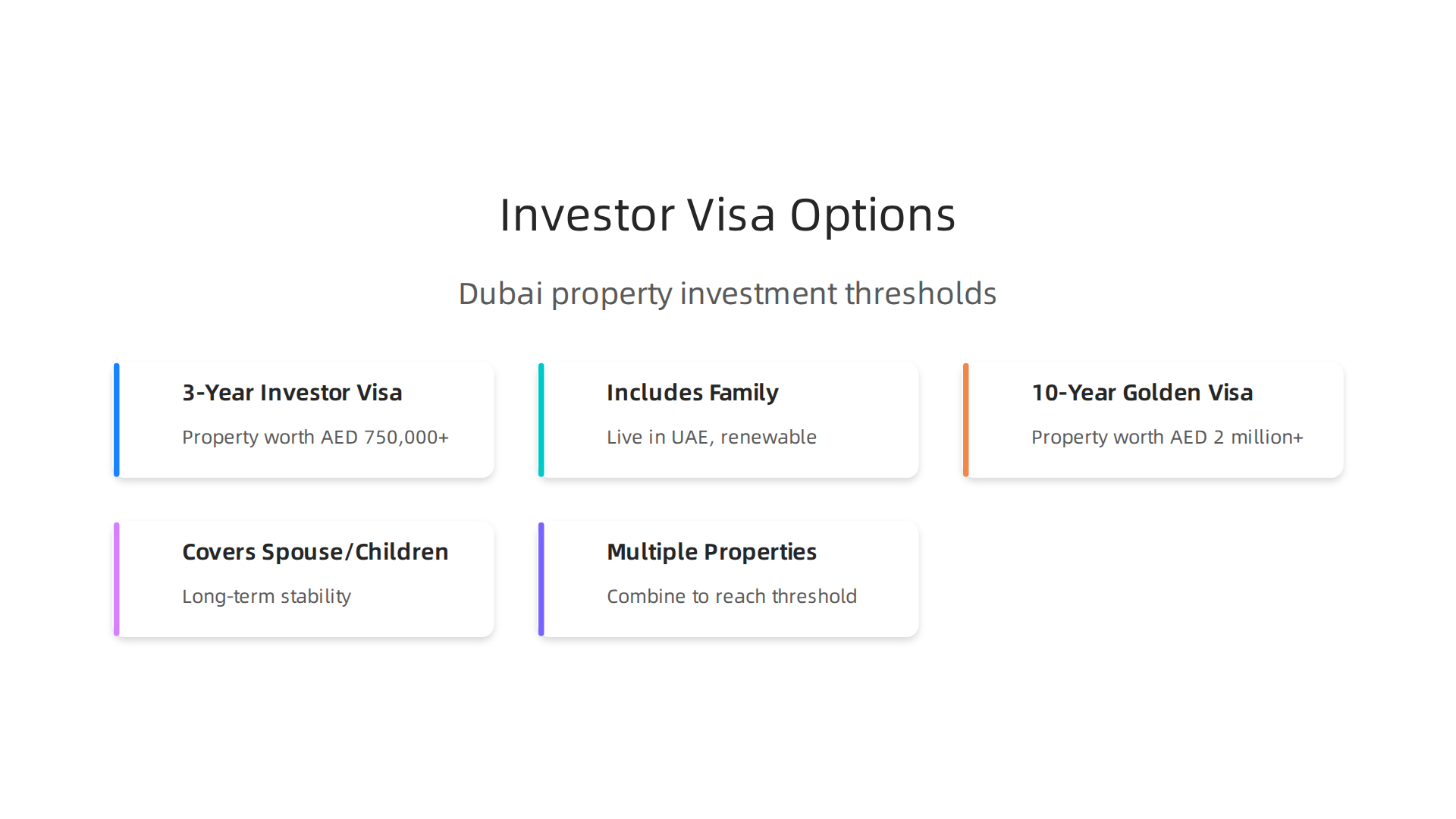
If you buy a property worth AED 750,000 or more, you may qualify for a 3-year investor visa. This visa allows you to live in the UAE and includes your family. You can renew it as long as you keep the property.
If you buy a property worth AED 2 million or more, you may qualify for the 10-year Golden Visa. This is a more prestigious option that also covers your spouse and children. The Golden Visa gives you long-term stability. Foreign investors can buy freehold property and qualify for the Golden Visa under current rules, making it a strong reason to invest.
Some investors buy a single property worth AED 2 million. Others combine multiple properties to reach the threshold. Either way, these visas make how to buy rental properties even more attractive because you get both income and residency.
Inheritance and Tax Considerations
Dubai has no annual property taxes and no capital gains tax. That keeps more money in your pocket. But you still need to plan for what happens to the property after you die. If you own property in your personal name, it will be handled under UAE inheritance law. If you own it through a company or trust, the rules may be different.
Talk to a legal advisor to make sure your plans protect your family.
What to Do Next
Understanding the legal side is not as fun as looking at properties, but it is just as important. Make a list of freehold areas that match your budget. Then check the visa requirements to see if you qualify. Once you know the rules, you can move forward with confidence.
For a deeper look at how to choose the right property in a specific area, check out this Dubai Opera property investment guide. It shows how to evaluate a single investment with your goals in mind.
Now let us move on to the next step: finding the right property.
4. Due Diligence and Property Selection
You found a property that looks perfect. The photos are beautiful. The price seems fair. But how do you know it is a good deal? That is where due diligence comes in.
Due diligence means checking everything before you sign. It is like test driving a car before you buy it. You want to make sure there are no hidden problems.

Verify the Title Deed and Ownership
The first step is to confirm who really owns the property. In Dubai, the Dubai Land Department (DLD) has a system called Makani. It lets you check the title deed and see if there are any debts or legal issues tied to the property.
When you look at a property, ask for the title deed number. Then use the Makani system to verify ownership. This step protects you from scams or sellers who do not have the right to sell.
For off-plan properties, the rules are different. The developer must use a RERA escrow account to hold your money. This account makes sure your funds go only to the project. If the developer delays or runs into money problems, your deposit is protected. Always check that the project has a valid escrow account before you pay anything.
Check the Developer and Property Condition
If you are buying a ready property, inspect it carefully. Look at the condition of the walls, plumbing, electrical systems, and common areas. Ask for service charge history. Service charges are fees you pay every year for building maintenance. If they are rising fast, your costs will go up too.
For off-plan properties, research the developer’s track record. Have they delivered projects on time? Are there complaints from past buyers? A good developer has a strong history. A bad one can leave you waiting for years.
Consider Long-Term Value
Do not buy just because the price is low. Think about whether the property will be easy to sell later. Is the area in demand? Will renters want to live there? These are key questions. A helpful guide on asset quality and exit flexibility can show you what to look for before you commit.
Also think about your own goals. Are you buying for rental income, future growth, or residency? Each goal needs a different type of property. For example, a studio flat near a metro station might be great for rentals. A large villa might be better for family living and long-term growth.
Get Professional Help
Due diligence takes time. But it saves you from costly mistakes. A good financial advisor or lawyer can help you check everything. They know the local rules and can spot red flags you might miss.
If you want expert support for your Dubai property search, get a FREE Dubai Real Estate Consultation. A local professional can walk you through the whole process and help you choose the right investment.
Taking these steps now will give you confidence when you finally make an offer.
5. Financing Your Purchase
You have found the right property. Now comes the big question: how will you pay for it? If you are learning how to buy rental properties in Dubai, understanding financing is a must.
How Much Can You Borrow?
Banks in Dubai treat non-residents differently than residents. For non-residents, most lenders cover 50% to 60% of the property value. That means you need a down payment of 40% to 50%. That is much higher than the 20% down payment residents need.
Interest rates are also higher for non-residents. In 2026, you can expect rates around 4.25% to 6.50% depending on your financial profile and whether you choose fixed or variable rates. This Dubai mortgage for non-residents guide explains the details clearly.
The maximum loan term is usually 15 to 25 years. Banks look at your income, existing debts, and country of residence to decide your borrowing amount.
Get Pre-Approved First
Before you start looking seriously, get pre-approved for a mortgage. Pre-approval shows sellers you are a serious buyer. It also helps you know your exact budget. This way, you only look at properties you can actually afford.
To apply for pre-approval, you will need your passport, bank statements from the last three to six months, tax returns, and proof of income. Each bank has its own list of approved countries, so check that your home country is on the list.
Islamic Finance Option
If you want to avoid interest for religious or personal reasons, Islamic finance is available. Dubai Islamic Bank offers Sharia-compliant home finance for non-residents. Instead of charging interest, the bank buys the property and sells it to you at a marked-up price paid in installments. This follows Islamic law and avoids riba (interest).
Banks for Non-Resident Mortgages
Several major banks offer mortgages for non-residents. These include Emirates NBD, HSBC, and First Abu Dhabi Bank. Each has different terms, so compare offers.
For more on managing your overall finances alongside property, read this guide on expat retirement planning in Dubai integrating social security and property.
Get Expert Help
Financing can feel complicated, especially when buying from another country. A mortgage advisor or financial planner can help you compare offers and pick the best option.
For personal guidance on your Dubai property purchase, get a FREE Dubai Real Estate Consultation. A local expert can connect you with the right financing and help you move forward with confidence.
With the right financing in place, you will be ready to make an offer and take the next step toward owning your Dubai property.
6. The Buying Process Step by Step
You have sorted your financing. Now you are ready to make a move. The actual buying process in Dubai usually takes 30 to 60 days for ready properties. Off-plan projects take much longer. Here is what to expect step by step when you learn how to buy rental properties in Dubai.
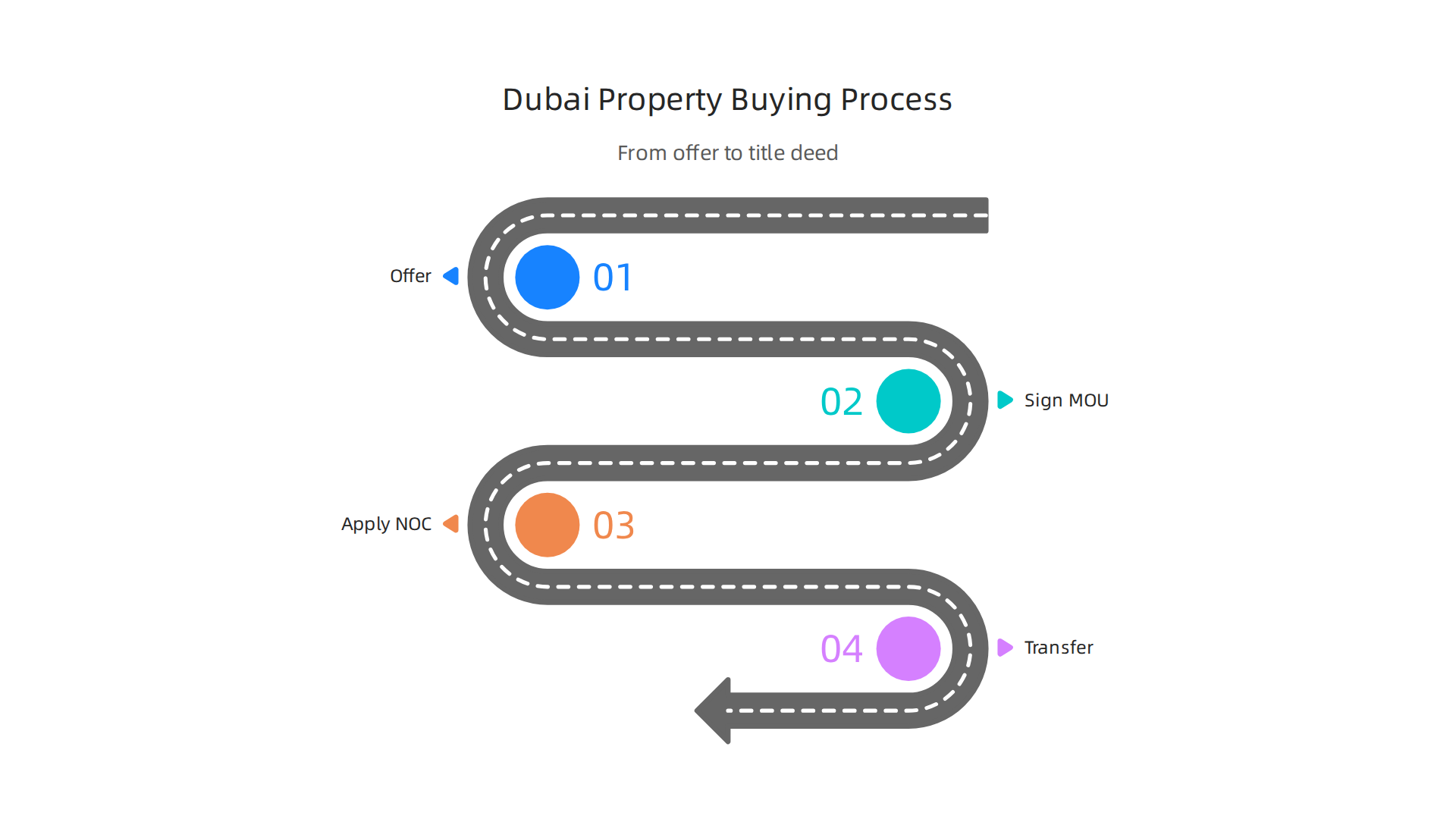
Step 1: Make an Offer and Negotiate
Once you find a property you like, your agent submits an offer to the seller. The seller can accept, reject, or counter your offer. This is the time to negotiate the final price and payment terms. A registered RERA-certified agent can handle this part smoothly and protect your interests. Working with a trusted professional from the start makes a big difference.
Step 2: Sign the Memorandum of Understanding (MOU)
When both sides agree on the terms, you sign the official sales agreement. This document is called the Memorandum of Understanding (MOU) or Form F. You can download it from the Dubai Land Department (DLD) website. Both you and the seller sign it in front of a witness, usually at a Registration Trustee’s office. At this stage, you pay a security deposit of 10% of the property price. This deposit is refundable until the final transfer goes through. For a full breakdown of the paperwork, see this legal steps guide for buying real estate in Dubai.
Step 3: Apply for a No Objection Certificate (NOC)
Next, you need a No Objection Certificate from the property developer. This document confirms there are no unpaid service charges or other issues with the property. The buyer, seller, and agent usually meet at the developer’s office to apply and pay for this certificate. Without the NOC, the transfer cannot move forward.
Step 4: Transfer Ownership at the Trustee Office
This is the final step. Both parties visit a Registration Trustee’s office or the Dubai Land Department. You bring your passport, the signed MOU, the NOC, and a cheque for the remaining balance. After the staff verify the data and you pay the fees, the ownership transfers to you. You receive your new title deed by email. The whole transfer can be completed in a single day.
Tips to Stay Safe
Always work with a RERA-certified agent. A good agent guides you through every stage and helps you avoid costly mistakes. It is also wise to hire a reputable lawyer to review the contract. To see how professional guidance fits into your bigger financial picture, read about what a financial advisor does for Dubai property investors.
Once the title deed is in your name, you officially own a Dubai property. From here, you can decide whether to live in it, rent it out, or add it to your growing portfolio.
7. Property Management and Tenant Relations
After the title deed is in your name, you have a choice. You can live in it, sell it later, or rent it out to earn income. If you want to be a landlord, you need to think about property management and tenant relations. This part is just as important as learning how to buy rental properties in the first place.
Most investors in Dubai choose to hire a professional property management company. These companies handle everything from finding tenants and collecting rent to handling maintenance and legal issues. Their fee is usually between 5% and 8% of the annual rent. That small cost saves you a lot of time and stress, especially if you do not live near your property.
If you decide to manage the property yourself, you must understand Dubai’s tenancy laws. The RERA Rental Disputes Center is the place where landlord and tenant issues get resolved. You need to know how to handle rent increases, evictions, and security deposits correctly. One wrong step can cost you money or get you into legal trouble.
Many investors find it helpful to start with a smaller property like a studio. You can look up a studio flat for rent in Dubai to see how the rental market works in different areas.
For a deeper look at the overall property market, you can check out a guide to buying property in Dubai from Bayut. While it covers the purchase process, it also gives you a good sense of the legal framework that applies to owning and renting out property here.
Whether you manage the property yourself or hire a company, staying on top of tenant relations is key. Happy tenants stay longer and take better care of your place. That means steady rental income for you.
If you want expert advice on managing your Dubai property or need help with your investment strategy, you can get a FREE Dubai Real Estate Consultation with Ayaz Salman. He can guide you through every step of the way.
8. Maximizing Returns and Tax Considerations
Buying the property is only the first step. To truly succeed, you need to think about how to make your investment grow. If you are learning how to buy rental properties, you must also learn how to get the best returns from them.
Boost Your Rental Yield Through Smart Upgrades
You do not need a huge renovation to increase your rent. Small, smart changes can make a big difference. Adding modern appliances, fresh paint, or smart home features like keyless locks can attract better tenants. According to the 2026 market insights from Engel & Völkers, fully furnished units can earn 10% to 25% more in annual rent than unfurnished ones.
Location also plays a big role in your returns. Areas like Jumeirah Village Circle (JVC) and Dubai South tend to offer higher yields. In some parts of JVC, studio apartments can bring in over 8% rental returns. Picking the right area is a huge part of learning how to buy rental properties that actually make money.
Keep Vacancies Low
The longer your property sits empty, the less you earn. Price your rent fairly from the start. Work with a good agent to find tenants quickly. Happy tenants also stay longer, which saves you the cost of finding new ones all the time.
Tax Rules You Need to Know
This is where Dubai really shines for investors. There is no property tax or income tax on your rental earnings. That means you keep almost everything you make.
But there are some rules to watch out for. If you run your rental business through a company, you may need to pay corporate tax. Value Added Tax (VAT) can also apply to certain services.
For international buyers, you must check the tax laws in your home country. Some countries tax you on income you earn anywhere in the world. You need a plan to handle this properly. A good way to start is by looking at how to handle expat retirement planning Dubai integrating social security and property so you avoid surprises later.
By focusing on upgrades, keeping your property rented, and understanding taxes, you can turn a simple purchase into a powerful investment.

Summary
This guide walks you through how to buy rental properties in Dubai with practical, data-driven advice for 2026. It explains why Dubai’s average rental yield (about 6.76%) is attractive, which neighbourhoods and property types tend to perform best, and how tenant preferences are shifting. The article covers budgeting in detail — including down payments, registration fees, service charges and typical mortgage terms for residents and non-residents — and compares financing, Islamic options, and pre-approval. It also explains the legal framework (freehold vs leasehold), ownership structures, investor visa thresholds, and inheritance considerations. You get a clear due-diligence checklist, the step-by-step buying and transfer process, and practical tips for managing tenants or hiring property managers. Finally, it shows how small upgrades, smart pricing and tax awareness can maximise returns and keep vacancies low so your Dubai investment works for you.